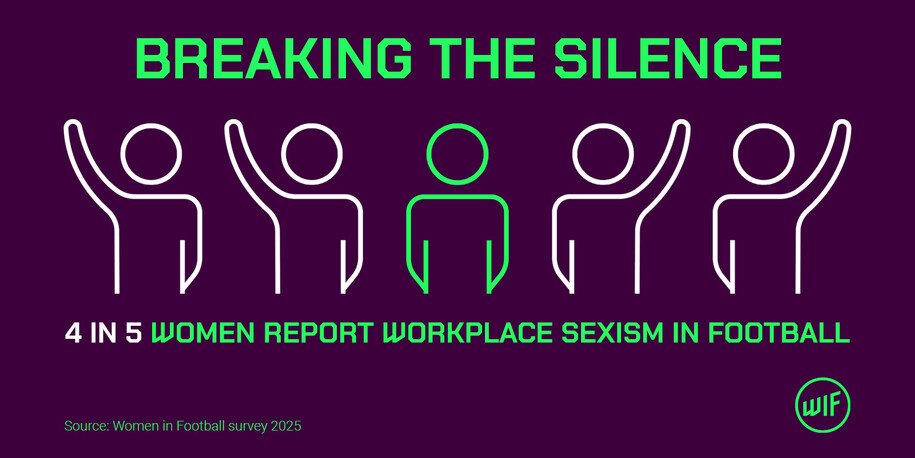
Sexism in football remains a serious problem, despite the growing success and visibility of women’s football. According to Women in Football‘s Breaking the Silence survey, 78% of women working in the industry have experienced gender-based discrimination, while 63.5% have been subjected to sexist jokes and banter.
From being underestimated and overlooked for opportunities to experiencing harassment and discrimination in the workplace, women working in football continue to face barriers that their male colleagues often don’t.
And while women’s football has made enormous progress in recent years, the experiences of women working behind the scenes tell a different story. Sexism remains a reality in workplaces across the UK, particularly in industries where men have traditionally held much of the power. According to HR company Ciphr’s workplace discrimination statistics, 15% of women reported experiencing sexism at work. Although the surveys are not directly comparable, Women in Football’s findings highlight the scale of discrimination within the industry.
For many women working in football, speaking out about sexism can mean risking their reputation, professional relationships or even their careers.
The Women’s Journal attended Women in Football’s 2026 Be Inspired Conference at Wembley Stadium, speaking to CEO Yvonne Harrison and legal experts about the discrimination women continue to face in football, the fear surrounding reporting it and what needs to change. So, despite the progress made on the pitch, how much has really changed behind the scenes?
The History of Sexism in Women’s Football
Football is often portrayed as a boys’ game, made by boys for boys, with women’s involvement sometimes dismissed as a modern, “woke” development. But women’s football has a much longer history than that.
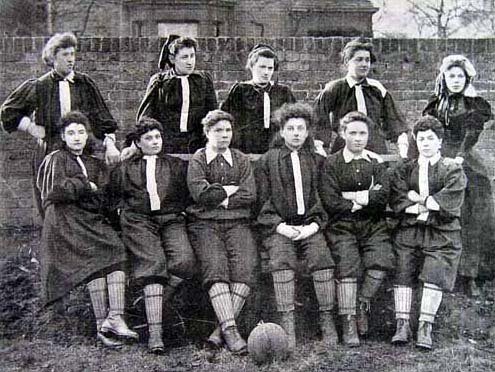
According to the FA, the first officially recorded women’s football match took place on 7 May 1881 between a Scottish and English team in Edinburgh. This led to more grassroots women’s football teams forming through workplaces such as factories and playing against each other. One of the most famous and earliest women’s football clubs in England was the British Ladies’ Football Club, founded in London in 1895.
In 1915, during the First World War, men’s professional football was suspended. As women took on work in factories, women’s football grew in popularity. By the end of the war, there were an estimated 150 women’s teams across the country. Charity matches raised money for the war effort, and the game even saw international fixtures, including an England–France match.
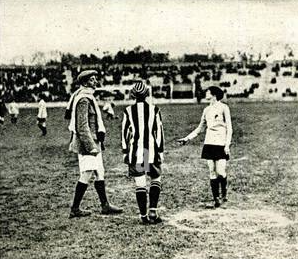
On 5 December 1921, the FA ruled that football was “quite unsuitable for females and ought not to be encouraged”, instructing affiliated clubs not to make their grounds available to women’s football. The restriction severely limited women’s access to established football facilities. The Women’s Football Association was formed in 1969, and the first Women’s FA Cup followed in 1971.
Sexism in Football Today: What the Statistics Reveal
More than 50 years later, women have greater opportunities to play at the highest levels of football. But access to the game doesn’t automatically mean equality, and the barriers women face have changed rather than disappeared.
In August 2015, Dr Eva Carneiro was working as the first-team doctor for Chelsea FC. She came under public scrutiny after entering the pitch alongside physiotherapist Jon Fearn to treat Eden Hazard during a match against Swansea City. Shortly after they entered the pitch, Mourinho allegedly shouted the Portuguese phrase “filha da puta”, meaning “daughter of a whore”, at Carneiro.
In January 2015, a female assistant referee at a Swindon game was met with sexist slurs and chants from fans. It started with chants of “Get your tits out for the lads” and continued with chants such as “Why is she not in the kitchen?” and “Should be out shopping”. According to The Washbag, some fans even made comments about what they were “proposing to do to her later that night”.
Now, you could argue that these incidents happened more than ten years ago, so surely things have changed since then. But the Breaking the Silence survey suggests otherwise. It highlighted that discrimination in football remains persistent and widespread, reporting systems are ineffective and workplace culture continues to be a significant barrier.
“These are not just numbers – they are the lived experiences of people working in the game, and they deserve better. If the industry is to change, we need to recognise these hard truths”, said Women in Football CEO Yvonne Harrison.
Why Women Are Afraid to Report Sexism in Football
When a third of women don’t report cases of discrimination or abuse because they don’t believe it will lead to any action or results, that’s when we know something needs to change.
In September 2022, Women in Football partnered with Mishcon de Reya to provide members with pro bono legal advice in discrimination cases. The Women’s Journal spoke with Safwan Afridi, managing associate at Mishcon de Reya, about the barriers people face when reporting sexism and why some don’t trust the process.
“The most common barriers many members relay to us are fear of retaliation or repercussions after raising complaints of potential gender-based discrimination or sexual harassment, and a lack of trust in the investigation of such a report, he explained.
“There is often a fear that complaints will not be kept confidential, which is particularly acute in smaller teams, and that the complainant will be labelled a ‘troublemaker’ in the wider industry. There are often significant power imbalances within organisations in the football sector, and this is particularly significant where alleged conduct involves someone senior, high-profile and/or valuable to the commercial arm of a Club or organisation.”
How to Report Sexism and Discrimination in Football
Women in Football’s discrimination incidents reporting process gives members a way to raise concerns and access support. The next steps depend on the incident and the kind of help the member wants. Anyone considering legal advice should check what information needs to be shared as part of that process.
The organisation categorises incidents into three groups: workplace incidents, match day incidents and social media incidents. Depending on the nature of the complaint, the reporting process and support available may differ. You can find more information in Women in Football’s Discrimination Incidents FAQs.
A spokesperson for Women in Football said that any actions taken are completely down to the members, but the organisation is there to guide and support them.
“Sometimes members just want to talk, and we listen, simple as that, sometimes they appreciate some guidance on dealing with certain situations, and sometimes it’s legal advice they need”, they said.
The organisation also uses its knowledge of common issues members face to advocate for change in conversations with stakeholders and in policy discussions where appropriate.
“These would be high level and never specific to any individual, case, or organisation”, they added.
One woman who used Women in Football’s discrimination reporting process shared how the organisation supported her after she experienced sexism at work in 2014. “I suffered direct sex discrimination from a Director at the Football Club I work for. At first I could not believe that in 2014 this kind of thing still existed, as soon as I contacted Women in Football I felt better,” she said.
“I was reassured about the process of making a formal complaint and was supported afterwards. A Football Club is a male dominated environment and can be intimidating; with the help of Women in Football, it didn’t seem as daunting. Thank you for all of your help and support.”
What Are Your Legal Rights When Reporting Sexism at Work?
Afridi advises everyone to keep a written, contemporaneous record of what has happened, including dates, witnesses and any relevant messages, even if you’re not sure whether you want to take things further.
“Memories fade and it can be particularly difficult to recall details under stress or when suffering from ill-health”, he said.
Afridi explained that, from 6 April 2026, disclosures regarding sexual harassment explicitly qualify for whistleblower protection. This means an individual may be protected from dismissal or other detriment as a result of making a qualifying whistleblowing disclosure about sexual harassment.
He added that gender-based discrimination and harassment more broadly, such as being passed over for opportunities because of gender without a sexual element, could also fall within whistleblower protection if the disclosure concerns a breach of an employer’s legal obligations.
However, Afridi stressed that legal protection alone does not address the practical fears people may have about speaking up, including reputational damage in a small industry, the time and stress involved in bringing a tribunal claim, and the fact that many people simply want the behaviour to stop without risking their jobs.
“The law can reduce the risk of being punished for speaking up, but building the confidence to actually do so still depends heavily on how individual organisations implement it,” he said.
Before making any kind of report, it’s important to understand your rights. Our guide to women’s rights at work in the UK covers sexual harassment, workplace discrimination and the legal protections available to employees.
How Can Sexism in Football Be Tackled?
For Yvonne Harrison, CEO of Women in Football, tackling sexism in the industry starts with changing workplace culture, not simply introducing policies.
“I think from an organisational point of view, it’s not just about having policies, it’s about how you live and breathe the culture, how women feel they can raise an issue, how all colleagues including allies can kind of challenge behaviours that are not appropriate in the workplace. You know, something might have passed 20 years ago, it’s not okay now. And it’s about giving women the confidence that when they do report something, they will be a, believed, b, listened to and c, appropriate action will be taken”, she told us.
Harrison wants to see more organisations join Women in Football to help women build confidence, develop their careers and progress into senior positions across the industry.
“The more organisations we get on board, the better success we’ll have for women going into these businesses and staying in them and really thriving and sort of progressing up the pathway really. So I want to see lots of representation of diverse women in all sorts of different positions. You know, it’s not just about women in those C-suite positions”, she said.
According to Afridi, clubs should also make some direct changes themselves. It’s important that clubs provide clear and easily accessible policies setting out how to report wrongdoing and what happens after a report is made. He said they should also have separate processes for reports involving someone’s line manager, provide regular training to staff on harassment and put safeguards in place to ensure employees are protected in their workplace.
“I would like to see Clubs publishing aggregate, anonymous data on how many reports are made and their outcomes. Consistent and visible action taken in response to complaints, even where the outcome is not made public, will go a long way to remediating workplace culture, and building trust. An anonymous whistleblowing hotline could also help more people come forward”, Afridi said.
Women have fought for their place in football for generations. But the next stage of progress cannot rest on their resilience alone. As Women in Football’s survey shows, the industry still has work to do to ensure women are treated fairly, concerns are taken seriously and speaking up does not come at the cost of a career.
For Harrison, progress means turning ambition into action. As she put it: “Progress doesn’t happen by accident, it happens when we turn ambition into action. That’s why WIF exists.”
To find out more about the work Women in Football is doing to tackle discrimination, or how you can get involved, visit the Women in Football website.