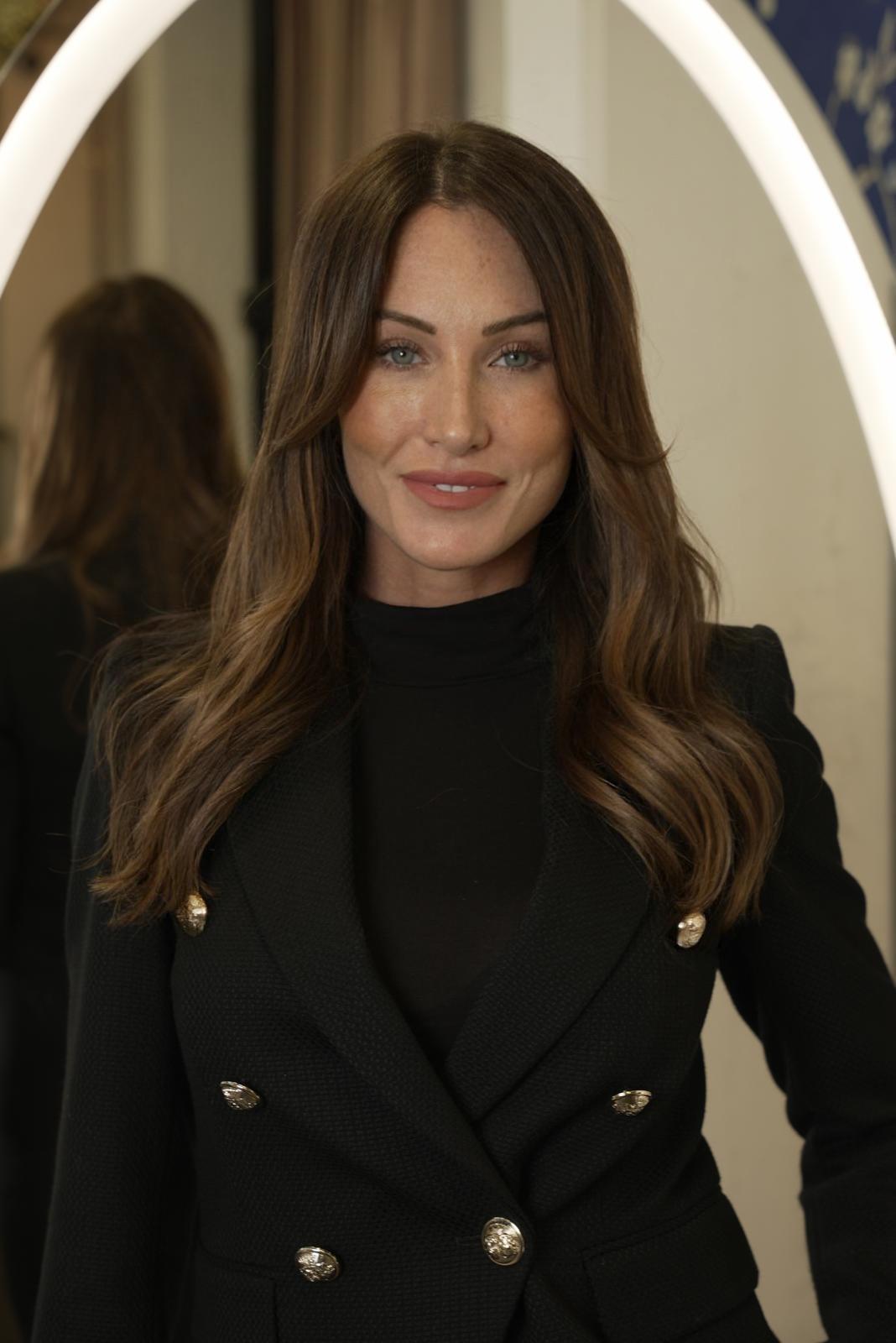

Debbie Thomas is one of the UK’s most respected laser and skin health specialists, known for pioneering advanced treatment protocols that prioritise long-term skin health over quick fixes. As the founder of D.Thomas Clinic, she has spent more than 16 years redefining how advanced skin treatments are approached, combining science, strategy and clinical expertise to deliver consistent, safe results.
Growing up in a single-parent household with limited financial resources, Debbie Thomas developed the resilience and independence that would later influence her professional journey. Determined to build her own future, she pursued a career in beauty with the mindset that she would never settle for being an ‘average’ beauty therapist. That drive led her to challenge traditional industry approaches and create her now well-known stacking treatment protocols – combining technologies and treatments tailored to the individual rather than relying on rigid treatment menus. Alongside her clinic work, Debbie Thomas recently launched Cellis skincare, a results-driven skincare brand designed to simplify routines while delivering maximum impact through complex, multi-benefit formulas.
Debbie Thomas sits down with The Women’s Journal to talk candidly about her career, the evolution of advanced skin treatments and the realities of building a business as a woman determined to do things differently.
The Female-Founded Business Plan
What is your business, and what led you to start it?
The D.Thomas Clinic, offering advanced skin treatments like lasers, opened 16 years ago. I started it because I was frustrated by how lasers and advanced skin treatments were being used at that time – underutilised, overly rigid and often approached like a fixed single-issue menu. Skin isn’t rigid. People aren’t rigid. Protocols have to flex if you want consistent, safe results for every client.
That’s why I pioneered my signature stacking protocols – combining the right machines and treatments for the individual rather than treating everything as standalone. It was a risk not just starting a business in the recession but also breaking the mould on how these treatments were performed. I’ve always taken a skin health-first approach to be more consistent, less damaging and building results by working with the skin rather than aggressively attacking it.
After eight years of development, I launched Cellis skincare in 2025. I wanted to simplify skincare routines in the real world. Fewer products, more impact. I prefer complex formulas that do the heavy lifting with multiple benefits rather than a guessing game with layers and ingredients you can barely understand unless you have a chemistry degree.
I was also conscious of waste. Beauty can be ridiculous for packaging with bottles, tubes and pots and made worse by 10-12 step routines and products that need replacing every 4-6 weeks. My protocol can be as little as two steps, and each product lasts 3-4 months. That means less packaging, less clutter and a routine people can actually stick to because it’s too easy not to. Consistency is where results live and skin needs a reliable message, not a car crash of signals.
What do you love about your business?
I love making people feel good about themselves with results that are positive and realistic. When someone feels better in their skin, it changes how they show up in life. That confidence shift is the bit I care about.
I also genuinely enjoy the work. It’s science, common sense, craft and strategy. You’re constantly balancing what’s ideal with what’s achievable and doing it safely.
But on another level I love running a business in this industry. The UK beauty sector is estimated to be worth £32 billion going into 2026. It is a growth area where other industries are struggling. It’s hard work but ultimately worth it.
Who has been your biggest inspiration?
People who think outside the box. They take (calculated) risks, push boundaries and don’t let other people’s opinions dampen their spirit. And honestly, the women around me. I have a group of girlfriends who are all building and doing well in different ways, corporate or entrepreneurial. They are driven, pushing boundaries and showing what women can do when we focus. Being around that kind of energy keeps you focused and inspired.
Skills, Experience and Mindset for Female Founders
What are three skills that you think every woman should develop when starting out?
Communication. Walking into a room and communicating in a way that leads somewhere – contacts, information, opportunity – it is vital. I learned that later than I should have (I’m naturally a bit of an introvert) and it’s been a major lesson if you want to grow.
Understand money and numbers. You don’t need to be an accountant, but you do need to understand the basics that either drive your business (revenue, cost of goods, profit, cashflow and the KPIs that actually matter) or for life planning (savings, investments etc).
The art of saying no and knowing when to say yes. Early on, it’s easy to scramble and say yes to everything just to ‘get out there’ but it’s rarely the best strategy. Giving your time away for free regularly often teaches people that you don’t have boundaries, so they can exploit you.
Always give 100% but don’t let others unfairly push your limits for their own gain. And say yes to the right networking. Say yes to dinner with friends. Say yes to the weekend away. Sometimes stepping back is what gives you energy, clarity and better ideas.
What has been a mistake in your career that you’ve learned from?
Not getting everything in writing and starting collaborations without terms I was genuinely happy with. Even very nice people can change their mind and behaviour when pressure, money or ego arrives. A solid contract isn’t about being difficult, it’s about being clear. It protects both sides and removes guesswork. The only time you have real power with an agreement is at the start so I’m precise now. I push back and I take wording seriously. It’s not aggressive, it’s professional.
What motivates you on a daily basis?
Hearing people praise my team and seeing positive feedback about the clinic or the products. Success is more than financial (I like money too), but satisfaction matters – knowing what we do genuinely impacts people in a good way.
I’m also motivated by growth. I like pushing my own boundaries, building new things, learning, improving, then sharing what works.
Women in Business
How have you had to adapt as a woman in business?
As a woman you learn quickly that in certain rooms, assumptions turn up before you’ve even sat down. I don’t spend much energy trying to manage that. If I’m not respected for my proven worth then that’s their problem, not mine. I focus on being prepared, being professional and being excellent at what I do. My success speaks louder than any attitude I have had to face.
What struggles have you had to overcome as a woman in business?
I wouldn’t call it struggle, it’s more an annoyance. I’ve been in investor meetings about my clinic where all questions are directed to my male business partner by default. It’s a strange experience, especially when you know you’re the one who built the vision, set the standards and drives the day-to-day. My partner is incredible, genuinely, but he isn’t me. As a result, I’m careful who I align with. If someone can’t work out where the competence is in a room, it’s not the right partnership for me.
How do you manage your work-life balance?
I am not a fan of this rhetoric. Balance is rarely something you ‘achieve’ if you want to be very successful at anything. Real life is trade-offs and compromise. To put the pressure on people to have it all is not healthy and it leaves you feeling like a failure. If you want a very successful business or career, you have to prioritise it. It takes time, energy and in some cases a piece of your soul.
If you want balance then start a hobby business or take a manageable job – less stress, less pay but more ‘me time’. Neither is better, they’re just different choices. The problem is pretending you can do everything at full intensity without consequences. Choose your most important life pillar to prioritise then build the others around that.
From a health perspective, I do what I can when I can. My only non-negotiable is sleep. I’d love to be the 5:30am gym person but I’m not so I don’t torture myself over it. Instead, I walk as much as I can and deep breathe a lot.
The only time I consciously switch off is when I’m out with friends or on a date with my husband. I try to be 100% present because I respect other people’s time and company. Outside of that I’m hands-on. I work from when I wake up until I’m getting ready for bed, maybe not every minute, but if my team needs support I’m there, even on weekends or holidays.
Advice for Aspiring Female Founders
What advice would you give to other women in business?
Believe in yourself, your path and your life decisions. No one else can build your life for you. If your gut is screaming at you, listen. Take the slightly risky job and leave a space that doesn’t respect your work.
People will try to shut you down for all sorts of reasons – their own insecurity, jealousy or old programming about what you ‘should’ do as a woman. Don’t let that noise shape your strategy. If you feel it is right, do it.
Practically, results are persuasive. Success changes conversations. Let your work and achievements do the talking before you arrive, then back it up with confidence and clarity.
I do think we as women have to prove ourselves a lot more than men, but see it as a bonus not a negative. In the short run, it’s frustrating, but in the long run, it makes you better, more qualified, more focused and more able to deal with the pressure of the next level.
For aspiring entrepreneurs and women in business looking to grow their knowledge and confidence, our guide to the best business books for women features inspiring titles covering female leadership, entrepreneurship and practical business advice for women.
What do you think still needs to be changed or done to help more women get into business?
I spend time with a lot of successful women and I’ve watched what it takes. Many have had to sacrifice any neat idea of ‘balance’ to get to the top. So part of the solution is honesty – less pressure to do it all and more freedom to choose a life path that prioritises work without judgement.
I get asked about children more than I get asked about my businesses. I don’t have children by choice and people still judge that decision, as if it makes me ‘less’. Men don’t carry that social pressure in the same way.
I also think we need to be serious about standards. The fairest workplaces are the ones that test properly – skills, work ethic, professionalism and output. If you’re doing the job well, you need to be rewarded. No one is inspired to grow when they are just a tick box or if they are not recognised for their abilities and output.
We need more discussions in schools where we can inspire girls with real-life success stories – but be honest. Talk about hard work and choices.
What are your three tips for aspiring female entrepreneurs?
Starting out is consuming – your time, energy and money don’t feel like your own. You take an idea through planning to launch and you get a short moment of relief and joy before you realise getting to launch was the easy part.
Making it work is harder – finding customers, delivering consistently and keeping the energy to grow and scale. It’s not easy, and I don’t think we should sugarcoat it. It is not for everyone, and that’s fine.
Go into it expecting to work harder than you ever have. You need grit and determination. You need ‘luck’ created from hard work. And you need to believe you can succeed because when it gets difficult (and it will), that belief is what stops you folding.
However, if your business really isn’t working, the bravest thing you can do is walk away. It can feel like failure but it isn’t the same thing. You did something most people wouldn’t even consider. You took a real risk. Learn why it didn’t work, make a new plan, and come back stronger with experience to leverage.
Do a robust worst-case business plan. What I mean is we all like to play the ‘if I’m doing the maximum XYZ five days a week, I will make ££££’ game. The reality is you need to work with the minimum numbers that let you survive. You need to plan financially and mentally that it will be a slow start. When you plan for the worst, you are planning to be robust, lean and focused. This is essential when you start out – forecast low and if you beat it, it’s a bonus.
Pay, Confidence and Negotiation for Women in Business
How can a woman ask for a pay rise? What is your advice for negotiating your salary as a woman?
I’ve run my own business for so long that I can only really answer this from the employer side. When someone asks me for a pay rise, I want them to own the request. Show me how you’ve grown, what you’re delivering now and why that justifies more. Not because you ‘need’ it but because you’re bringing more value, you’ve shown consistency and you’re operating at a higher level.
Someone new to a role isn’t the same as someone experienced in that role. If people have the same experience and performance, I’d expect to pay the same basic wage.
If you’re growing into a role and gaining experience, you’re unlikely to get paid the same as the experienced person. Don’t take it personally, just become the experienced one.
One practical point people don’t say out loud enough – the biggest pay rises nearly always come from moving companies. If you’ve been somewhere a long time, the business can hold an imprint of who you were when you started, especially if you came in junior. You can grow massively, but internally you’re still sometimes priced like the earlier version of you.
Take two to three years of experience and move if you’re not getting what you’re worth. You walk into the next company as ‘the experienced one’ from day one and remember to get your contract right – this is your time to negotiate your terms.
What is your favourite motivational quote?
“If you don’t have a dream, how are you going to have a dream come true?”
For me that means decide what you want (but make it big), then build the plan and do the work. If there is no dream then there is no plan. I genuinely heard this at college and decided then that I wanted to be a pioneer at what I do, and today I am. It took nearly 30 years but I never stopped moving forward and never stopped believing in the dream, the plan and the destination.

About D.Thomas Clinic and Cellis Skincare
Founded by Debbie Thomas, D.Thomas Clinic is an advanced skin clinic based in Knightsbridge, London, specialising in laser treatments, skin rejuvenation and personalised protocols. With more than 16 years of experience, Debbie is known for pioneering her signature ‘stacking’ approach – combining multiple technologies and treatments tailored to the individual rather than relying on rigid treatment menus. Her skin health-first philosophy focuses on achieving consistent, safe results by working with the skin rather than aggressively treating it.
Alongside her clinical work, Debbie launched Cellis, a results-driven skincare brand designed to simplify skincare routines while delivering maximum impact. Developed over eight years, the brand focuses on high-performance, multi-benefit formulas that reduce the need for complicated routines, helping customers achieve healthier skin with fewer products, less packaging and routines that are easier to maintain consistently.