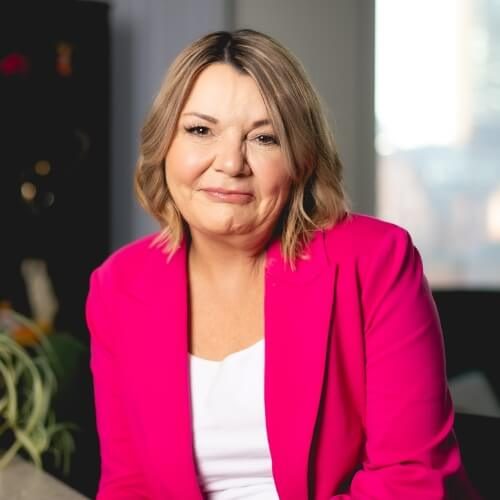

For a long time, I believed alcohol problems happened to other people. They happened to the people
whose lives looked visibly chaotic, whose drinking was loud, public and undeniable. I didn’t see myself
anywhere in that story I was a business owner. I was a mum. I was the woman who showed up, got things done, kept the plates spinning and smiled through it. From the outside, I looked capable and in control, so it never occurred to me that alcohol might be quietly taking control of me. That’s one of the reasons I’m writing this now, in the months after Dry January, when the cultural permission to pause often disappears and the old routines creep back in. We talk more than ever about wellness, balance and self-care, but when it comes to women and alcohol, the conversation can still feel strangely stuck. We either trivialise it with jokes about ‘wine o’clock’, or we treat addiction as something that looks a certain way, happens to a certain kind of person, and arrives with a dramatic crash. The reality, for many women, is far quieter than that. Dependence can grow slowly, in plain sight, while you continue to function, parent, work and perform ‘fine’.
Why Alcohol Problems in Women Often Go Unnoticed
I grew up in a culture where drinking was stitched into social life. It was normal, expected, and often
celebrated. Later, as I built my career running an events business, alcohol became even more entwined
with the world I lived in. Champagne receptions, wine with lunch, cocktails at award ceremonies, it was part of networking, part of hospitality, part of the job. Nobody questioned it because everyone was doing it. I didn’t question it either.
How Functioning Alcoholism Can Develop Slowly
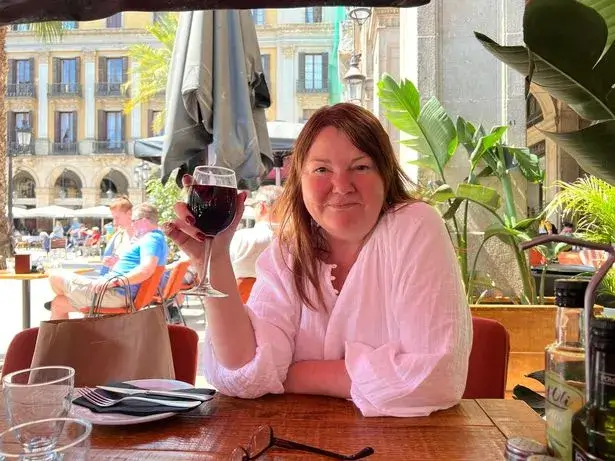
Looking back now, I can see that my relationship with alcohol was changing long before I admitted it to myself. It stopped being something I enjoyed and started being something I relied on. A glass of wine didn’t just feel like a treat after a long day, it felt like relief. And then, slowly, it felt like the only way to take the edge off. I thought about drinking earlier in the day than I used to. I made sure there was always enough in the house. I found myself saying I’d have one, and then watching the bottle empty with a hazy sense of inevitability. At the time, I didn’t label any of this as serious. I told myself I was stressed. I told myself I was coping. I told myself I deserved it. When people talk about the signs of alcoholism, they often imagine something extreme. They picture someone who can’t hold down a job, someone who is visibly unwell, someone whose life is falling apart. But for many women, the early signs are easy to rationalise, especially when you’re still ‘doing everything you’re supposed to do’. And it’s only with hindsight that you realise how much energy went into managing it. Planning, topping up, smoothing over, keeping it hidden, keeping yourself convinced.
The Early Signs of Functioning Alcoholism
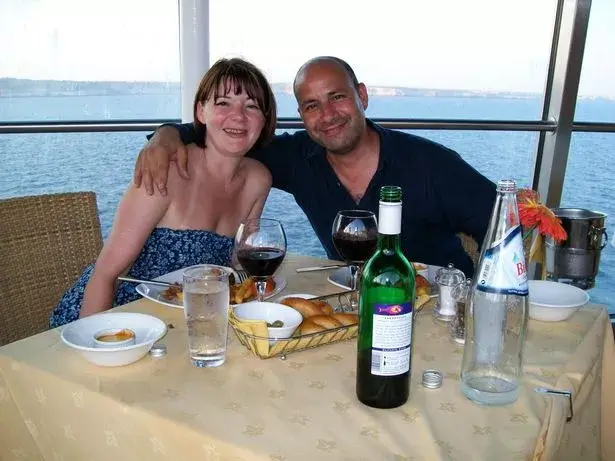
In 2017, everything in my life changed. My husband, Andy, suffered a sudden, catastrophic heart attack at home. Our son called 999 while I performed CPR, convinced I was watching the man I loved die in front of me. The fear was physical. The adrenaline was overwhelming. Time slowed into something unreal. When paramedics arrived and took over, I walked into the kitchen and drank a full bottle of wine. It wasn’t a decision I weighed up. It was instinct, the quickest route I knew to numb the shock in my body. In that moment, alcohol wasn’t about enjoyment or socialising. It was a switch I could flick to make the world feel bearable. Andy survived the initial heart attack, but he was left with catastrophic brain damage and placed in an induced coma. In the days and weeks that followed, I sat at his hospital bedside while doctors fought to save him, living in a constant state of dread. I was terrified, exhausted, and completely numb.
When Trauma and Grief Lead to Drinking to Cope
I started sneaking alcohol into the ward in soft drink bottles so I could drink without anyone noticing. Even now, writing that makes me wince, but at the time it felt logical. It felt like coping. It felt like survival. Alcohol became the way I steadied myself enough to keep turning up. When Andy eventually woke, he couldn’t walk, talk or recognise me. The man I knew was gone, even though he was still physically there. For three years he lived in specialist care before dying in 2020. Those years were a long, complicated grief that’s hard to describe unless you’ve lived something similar, grieving the person you lost while they are still alive, then grieving again when they are gone. All the while, I was raising our son, running a business, and doing what women so often do, carrying on. From the outside, I was functioning. That word became my armour. I told myself I couldn’t possibly have a serious problem because I still did the school run. I still worked. I still answered emails. I still met clients. I still looked presentable. I still managed. I now know that ‘functioning’ can be one of the most dangerous disguises, because it gives you endless ways to deny what’s happening.
The Reality of Being a Functioning Alcoholic
My drinking escalated in ways that were easy to hide and even easier to excuse. I drank to take the edge
off the day, then to silence the night. I drank because the quiet moments felt unbearable. When lockdown arrived, everything intensified. The world shut down, structure disappeared, and isolation wrapped itself around grief that already felt bottomless. Without the usual routines and social checks, alcohol slipped into more parts of my day. I drank earlier. I drank while working. I drank while making dinner. I drank because it was the quickest way to stop feeling.

How Drinking to Cope Can Turn Into Alcohol Dependence
It’s only now that I can see how many clear signs of alcoholism were there. I was drinking not to enjoy it,
but to manage emotion. I was hiding how much I drank, sometimes literally, sometimes by downplaying it. I was anxious if I didn’t have alcohol in the house. I promised myself I’d cut down, then found myself
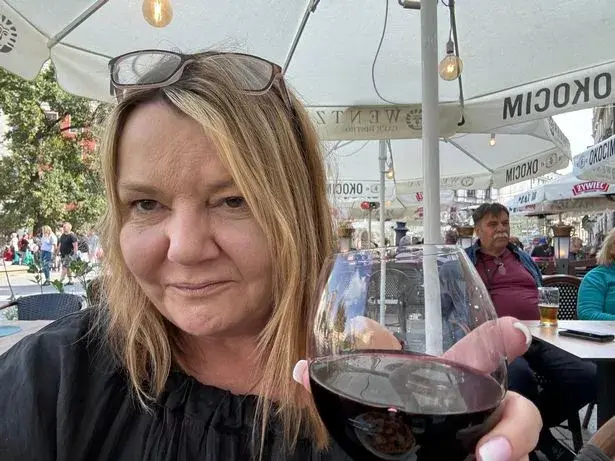
repeating the same pattern by evening. I woke up with dread, that low, nauseating feeling of shame that sits in your chest before you’ve even opened your eyes. I told myself I just needed to get through a difficult time, not realising that the difficult time had become my whole life. Women are particularly good at making this invisible. There is still a deep, sharp stigma around female addiction. Mothers are expected to be endlessly competent. Professional women are expected to be polished and capable. Widows are expected to grieve gracefully, quietly, without making anyone uncomfortable. And alcohol is sold to us as a reward, a treat, a coping mechanism that looks socially acceptable. It’s a glass of wine in a bubble bath. It’s a joke on a birthday card. It’s the normal way to exhale.
Why Women Often Hide Alcohol Problems
But if alcohol is the only way you can exhale, something is wrong. My turning point came in November 2024. I had tried to stop drinking on my own more times than I could count. I would swear I’d cut down, white-knuckle a few days, then slide back into it with a mix of relief and self-disgust. When I attempted to quit suddenly, my body reacted in a way that frightened me. I ended up in A&E with severe panic attacks. I couldn’t regulate my breathing. My nerves felt like they were sparking. I was terrified, and for the first time I had to admit something I had spent years avoiding, I couldn’t do this alone.
The Turning Point: Seeking Help for Alcohol Addiction
I checked into rehab for a medical detox the day before my son’s birthday. He hugged me tightly and said it was the best present I could give him. That sentence broke something open in me. In rehab, someone said words that still stay with me, “you are not a bad person, you are an unwell person
who needs help”. I cried because it was the first time I’d felt seen without judgement. For so long, shame
had kept me trapped. I thought asking for help meant failure. It turned out to be the most life-saving thing I could do. Sobriety didn’t fix everything overnight. In many ways, it was the beginning of feeling everything I had numbed for years. I had to learn how to sit with grief without blurring it. I had to learn how to be anxious without anaesthetising it. I had to meet myself as I actually was, not as the version I could tolerate after a few drinks. It was uncomfortable and raw and, at times, exhausting. And then, slowly, it got better. My anxiety began to ease. My sleep returned. My body started to heal. I realised I could feel joy again, real joy, not the false lift that lasts an hour and leaves you lower than before.
Life After Quitting Alcohol
The biggest surprise was that life didn’t become smaller without alcohol, it became bigger. I was present, I remembered things, I laughed properly. I could have conversations without calculating my next drink. My son got his mum back in a way he hadn’t had for a long time. Since getting sober, I’ve spoken to countless women who tell me they don’t know whether they have ‘a problem’, only that something doesn’t feel right. Many of them don’t relate to stereotypical addiction narratives. They’re holding down jobs, they’re raising children, they’re caring for parents, they’re high-achieving, high-functioning, outwardly successful. They’re also quietly googling phrases like “am I drinking too much?” late at night, then closing the tab in the morning and carrying on. This is why I believe the conversation about women and alcohol has to become more honest and more nuanced. It has to move beyond January resets and clever slogans, and into the messy, real, complicated middle where most women live. The question isn’t always “am I an alcoholic?”, sometimes it’s simply, “is this helping me, or is this hurting me?”. Sometimes it’s, “who am I without this?”. Sometimes it’s, “why does stopping feel so hard?” I don’t believe every woman needs to quit drinking. I’m not interested in moralising or telling anyone what their life should look like. What I do believe is that we deserve to ask the question without shame. We deserve to talk about the signs of alcoholism without waiting for catastrophe. We deserve to recognise that needing help doesn’t make you weak, it makes you human. That’s part of why I’ve put my energy into building sober communities and spaces where people can connect without judgement, whether they are fully sober, sober-curious, or somewhere in between. Recovery isn’t one-size-fits-all, and not everyone feels at home in traditional models. Sometimes what people need first is simply to be believed, to be understood, to sit in a room, and realise they are not the only person who has been struggling in silence.
The Rise of Midlife Sobriety
Today, I have been sober since November 2024. My life isn’t perfect, and grief doesn’t vanish because you stop drinking. I still miss my husband Andy, and there are still days that ache, but I feel them honestly now,
and that honesty has changed everything. I wake up without dread, I move through the world with clarity
rather than fog, and I am present in my son’s life in a way that feels like a second chance. For years, I told myself I wasn’t an alcoholic because I could still function. I told myself I was coping, surviving, managing. The truth is, alcohol had slowly become the centre of my life while I was busy convincing everyone, including myself, that I was fine. Choosing sobriety didn’t end my story. It gave me the chance to start living it fully. If you’re reading this and quietly questioning your own relationship with alcohol, you don’t have to wait for everything to fall apart before choosing something different. You don’t need a label to take yourself seriously. If you’ve found yourself drinking to cope, hiding it, feeling anxious without it, or promising yourself you’ll stop and then struggling to follow through, that matters. You are not alone, and you are not beyond help. For a long time, I thought alcohol was what carried me through the hardest years of my life. In reality, it was keeping me trapped inside them. Sobriety hasn’t been about losing something, it has been about getting my life back, piece by piece and moment by moment, and finally being present for it.