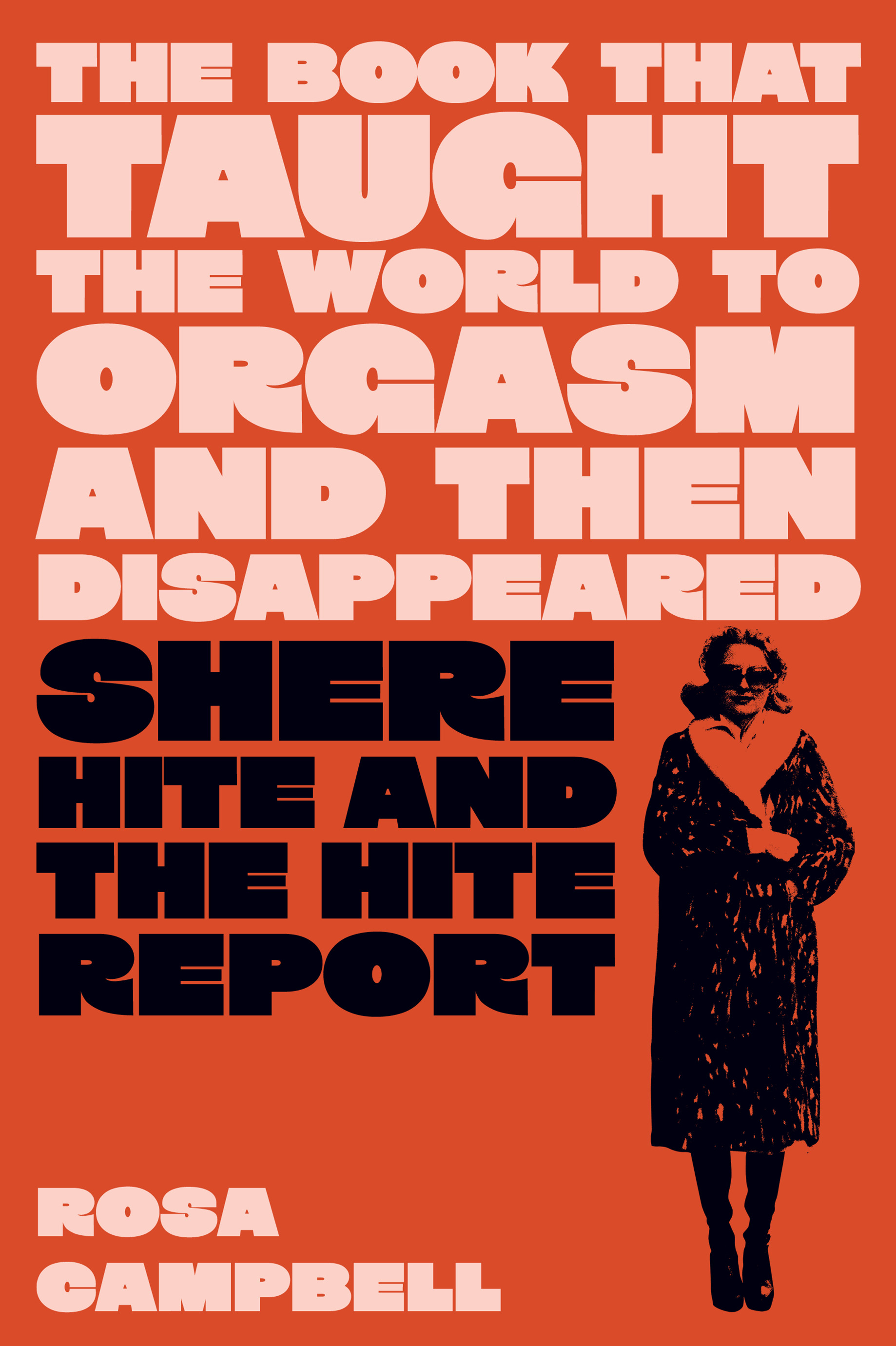

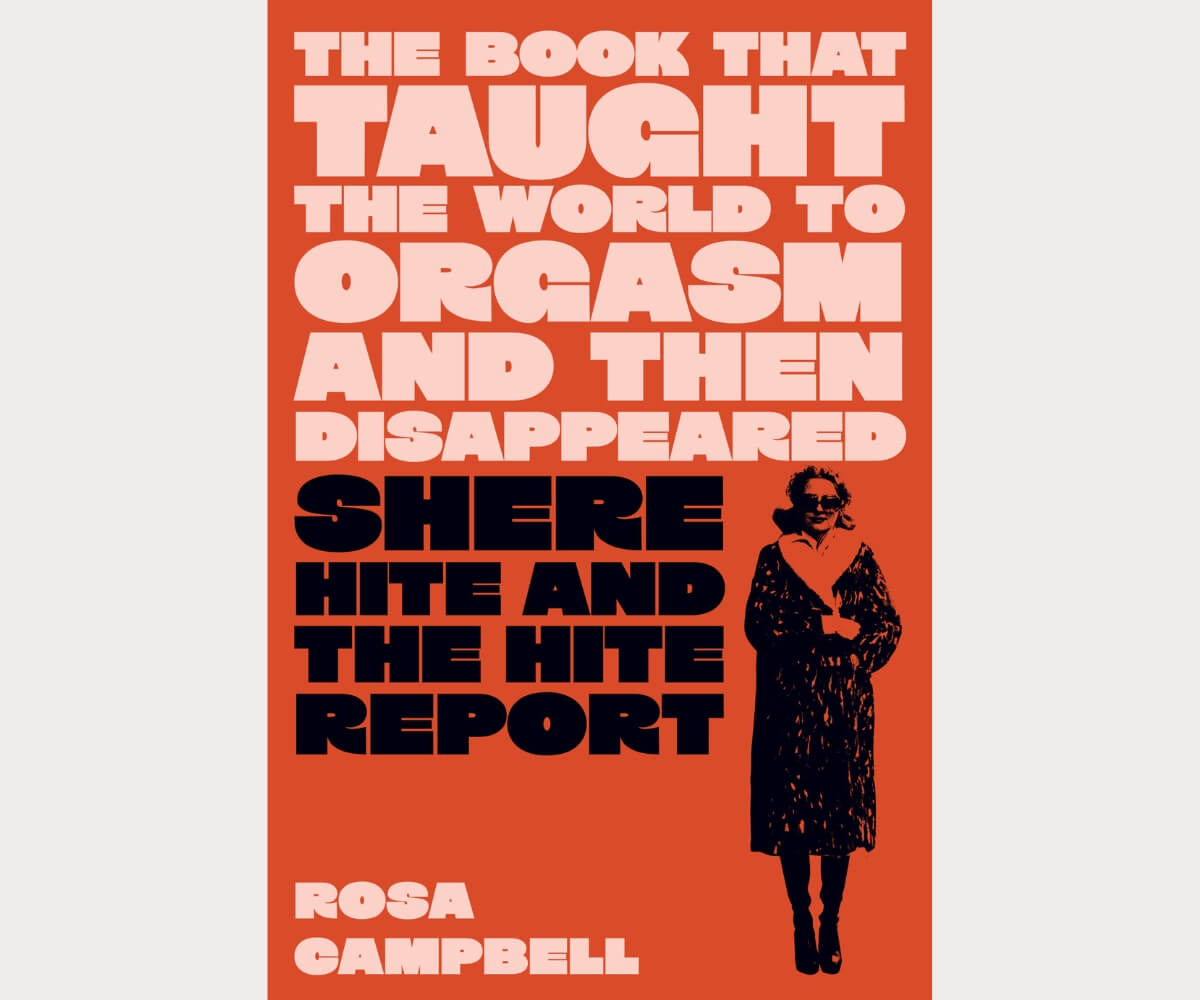
Historian Rosa Campbell re-examines feminist history with The Book that Taught the World to Orgasm and then Disappeared. An unnervingly relevant book tracking the report – and woman – that made sex political, Campbell offers The Women’s Journal exclusive insight into the ideas and topics explored in her work.
The book explores the legacy of The Hite Report and the life of feminist sexologist Shere Hite, whose groundbreaking work transformed conversations around female sexuality and feminist politics. Combining feminist history, cultural criticism and biography, Campbell revisits one of the most controversial feminist figures of the twentieth century.
The Book that Taught the World to Orgasm and then Disappeared Review
Shere Hite’s 1976 The Hite Report, the thirtieth best-selling book of all-time and credited with transforming the sex lives of middle America, has largely been forgotten. Five decades on, the mystery behind its fall from public consciousness, as well as the enigmatic personality of Hite herself, are the subject of Campbell’s new book.
Campbell – referred to here by her last name, a convention which she herself forgoes when discussing Shere in acknowledgement of the sense of familiarity she developed with the late sexologist’s life across the course of documenting her story – is the first person to write a full book about Shere Hite.
“I didn’t know her personally, so we didn’t have a close relationship in that way,” Campbell explained. “But I wanted to write a book that did her contribution justice while not minimising her flaws. Sometimes I think the way we critique feminists of an earlier period is so indignant, self-confident, and suspicious. The critique is often used to demonstrate that we have it all figured out, which we do not.
“So I certainly approached the project with an ethics of empathy and generosity, while also being astute to Shere’s limits.”
So, a groundbreaking book about a groundbreaking book.
Why The Hite Report Changed Feminist History
Considering that Hite’s life, work and even appearance was so strikingly unique, this lack of literary attention is remarkable. A playboy model turned radical feminist researcher, she defies convention, even by contemporary standards.
“This is one of the most fascinating things about the whole captivating story,” Campbell said. “I spent a lot of time unpicking why she had such an impact and yet there hadn’t been much written about her and the impact of The Hite Report historically. I think the short answer is because the backlash against her was so complete, it really did undermine her work and contribution.
“I came to understand through lots of research that the response to her first book reflected the rise of the women’s liberation movement and the negative responses to her second and third books reflected the backlash against feminism and the rise of the religious right in the US. Shere was also targeted because she was highly sensitive, and so famous with her book selling well-beyond other feminist books by the tens of millions, really freighting those ideas to the mainstream, and she talked about how sex reflected power imbalances. She made mistakes certainly when it came to methodology, but her work was really brought into disrepute because it was relentlessly feminist.”
The book tracks Hite’s life from her difficult and unstable childhood, through her years balancing studying at Colombia University with precarious stints in nude modelling, to the world-shattering release – and fallout – of her eponymous report on female sexuality.
There’s a real sense of affection to Campbell’s writing, who provides occasional commentary on what different figures featured throughout may have felt, or worn, or thought, elevating her book beyond detached historical study or biography.
This feels all the more appropriate given the intensely human quality of the subject of the book – Hite’s work. In seeking to prove that a woman’s place in sex mirrored her place in society, Hite sent out surveys to thousands of women: teenage girls, wives, stay-at-home mothers, activists, disabled women. Their responses formed the basis of The Hite Report, reaching the homes and offices of millions across the world upon publication, forever shifting perspectives on sex and relationships, as well as introducing feminism to people outside the movement’s typical audience.
As Campbell highlights, it wasn’t just straight, young women who were impacted by Hite’s work; elderly lesbians wrote thank you letters to the researcher, working class men who had been handed the book by their wives and girlfriends thanked Hite for opening their eyes and saving their relationships – The Report even made it into the hands of students in East Berlin.
Campbell recalled her first interaction with Hite’s work: “I read the book when I was ten, too young, but better this book than internet porn as a sexual entrée – which is what’s on offer for many ten year olds today. My parents, 1970s radicals, had a copy and I suspected it was a book of sexual revelations disguised as a serious report. I was right.
“When I became a historian of global feminism, women spoke to me about their involvement in the women’s liberation movement and often mentioned The Hite Report, but it was never – or so very rarely – mentioned in any of the histories of the movement I was reading. It was also quite an odd book. The Hite Report is different from other women’s movement material, it’s not a manifesto, a treatise on the role of women, a book of poetry. It’s a DIY feminist sexology report and to make sense of it, why it sold millions of copies, why it was so radical, I felt we needed to place it in context and that perhaps I could use my skills as a historian to do so. Shere also didn’t look like you might expect a feminist to look, she was highly feminine with her strawberry blonde curls, 1940s fashion and maximalist costume jewellery, so she was extra intriguing.”
The Controversies Around Shere Hite’s Work
The shortcomings of Hite’s work – its lack of intersectionality and propensity for a ‘white saviour’ frame of feminist thinking, as well as questions around the dubious methodology and handling of statistics – are all examined by Campbell. However, she presents a convincing depiction of the real impact that Hite’s book had on shifting the sex and personal lives, and therefore entire worldviews, of people that would otherwise have been unlikely to engage with – and be liberated by – the work of an unabashedly radical feminist.
When asked what Hite may have thought of her literary depiction, Campbell was conscious of how the researcher may have felt about being criticised: “I hope she would have enjoyed it, felt it did her justice and accepted it, but I’m not sure.
“The book celebrates her contribution but it’s not wholly uncritical; I try to be fearlessly critical where necessary particularly about her race politics, and her imperialist feminism. When the book travels to the global south on the coattails of American power, her feminism is imperialist and she sees women in need of uplift by their white American sisters. She doesn’t read much feminist work developed by women in the South about the South. I don’t downplay these flaws or smooth over her faults. Sometimes she teaches us what not to do.”
Women pour their hearts out when responding to Hite’s survey, seemingly proving her initial hypothesis correct: in the bedroom, as in work, politics, and everyday life, women’s voices and thoughts were being silenced, ignored, and belittled in favour of whatever narrative better-suited men. The genuine relief felt by female readers of The Hite Report, revealed in letters saved by Hite and read by Campbell, is palpable. For the first time, women were given reassurance that their supposedly uniquely strange personal experiences were, actually, widespread.
It is these personal and societal responses to Hite’s work, rather than any specific scientific revelations it uncovered, which Campbell emphasises as The Report’s most important legacy. In doing so, she effectively undermines some of the more frequent criticisms around Hite’s research methodology, suggesting that to dismiss a book which evidently provoked a huge shift in attitudes to gender and sexuality would be to overlook a real turning point in modern western feminism.

Within popular culture, there are many highly-regarded works which must be placed within the context of their time to be fully appreciated. Classic science-fiction films can seem unintendedly funny given the leaps made across the years in CGI and other contemporary production techniques. But the way Campbell describes the findings and ideas of The Hite Report make it feel timely, even accounting for its ostensibly outdated approaches to scientific study and the overwhelmingly white perspective.
Whether the enduring relevance of Hite’s work is more an indictment of a society which seems to have advanced further with technology than women’s rights or a glowing reflection of her writing and research skills is another question.
Why Shere Hite’s Story Still Feels Relevant Today
Reading Campbell’s depiction, written in a post-Me Too, post-Roe v Wade world, of Shere Hite’s specific era of late seventies feminism, it is impossible not to draw comparisons between now and then. It is not just that Hite is shown to have been concerned with many topics still inhibiting the lives of women worldwide today – violent pornography, prevalent rape culture, institutionally sexist structures of power.
Rather, Campbell seems to identify the orchestrated downfall of Hite as the most eerily pertinent aspect of her story. Hite is eventually torn apart by the New Right movement of the eighties, with right wing media and activists, both male and female, ultimately rallying to pick apart her work, personality and appearance. They succeed, and Hite, along with her Report, has been widely disremembered since. Campbell’s examination of backlash against feminism and women speaking openly about sexuality makes the book feel strikingly contemporary.
Hite’s carefully architected downfall in backlash to her progressive views bears many similarities with the rise of the manosphere, the culture wars in media and politics, the surge in the popularity of alt-right parties – all things which Campbell highlights throughout her writing, particularly in the epilogue. In many ways, Shere Hite becomes emblematic of the swing against the left, the trajectory of her life a prototype for what we might now call the death – or killing – of ‘woke’.
“I think the victim-survivors of Jeffrey Epstein as well as the journalists who have gone after the story, have been ruthlessly silenced, attacked and undermined for years,” Campbell said. “Despite MeToo, it is an incredibly dangerous time to call powerful men out for sexual assault. While Shere wasn’t sexually assaulted, I think the shocking treatment of women who hold attackers to account around sexual assault leaks into the treatment women receive when they talk about how sex is infused with power, particularly for a woman who had worked in the sex industry, which Shere had.”
By foregrounding from the start of her book the obvious social impact of Hite’s work, Campbell emphasises the wider implication of the rise and fall of the Report‘s author. The backlash against Hite was an attack on the disruptive feminist movement she represented. In this way, Hite becomes symbolic of how women’s rights and lives are frequently treated as pawns by reactionary political and media organisations. Just as The Hite Report proved that women’s place in sex is a mirror of their place in society, Campbell proves that the story of Hite’s life, too, mirrors the oppressive political structures which continue to harm women everywhere.
The Book that Taught the World to Orgasm and then Disappeared by Rosa Campbell is available to buy now.