
Semi-permanent eyebrows have become one of the most sought-after beauty treatments, offering a long-lasting solution for fuller, more defined brows without the need for daily makeup. But with terms like microblading, powder brows and combination brows all circulating, it can be difficult to know what each treatment involves and which is right for you. To demystify the process, The Women’s Journal spoke to semi-permanent makeup specialist Sian Dellar, who explains everything you need to know before booking your permanent brow appointment from understanding the differences between each method to knowing what to expect in terms of results, longevity and aftercare.
What Are Semi-Permanent Eyebrows?
Semi-permanent eyebrows are a form of cosmetic tattooing designed to enhance the natural shape, density and definition of your brows. Unlike traditional tattooing, the pigment is implanted more superficially into the skin, allowing it to fade gradually over time rather than remaining permanent. This makes the treatment a popular choice for those looking for a low-maintenance beauty solution that still feels soft and natural. Techniques vary from delicate, hair-like strokes to softly shaded finishes, depending on your desired look and skin type.
Microblading vs Semi-Permanent Brows: What’s the Difference?
“Microblading is a manual technique that uses a handheld blade to create fine, hair-like strokes in the skin, into which pigment is placed,” explains Sian. “It is best suited to normal-to-dry skin and delivers a very natural, hairstroke effect.”
However, microblading is just one option within a broader category. “Semi-permanent brows is an umbrella term that includes microblading as well as machine-based techniques such as powder brows, ombré brows, and combination brows,” she says. “These methods use a digital device to implant pigment more softly into the skin, offering longer-lasting results and better retention on a wider range of skin types.” This distinction is key when deciding which treatment will work best for you, particularly if you have oily or sensitive skin.
What Is the Best Type of Semi-Permanent Eyebrows?
There is no single technique that suits everyone, and choosing the best semi-permanent eyebrows depends on your skin, lifestyle and the finish you are looking to achieve. “There is no single ‘best’ method – the ideal technique depends on skin type, lifestyle and the desired result,” says Sian. That said, combination brows are widely regarded as one of the most reliable options available today. Blending both hairstrokes and soft shading, this technique offers a balanced, natural look with added definition. “They tend to heal more evenly, last longer than microblading, work well for oily or mature skin, and fade more gracefully over time,” she adds. A professional consultation remains essential to tailor the treatment to your individual features.
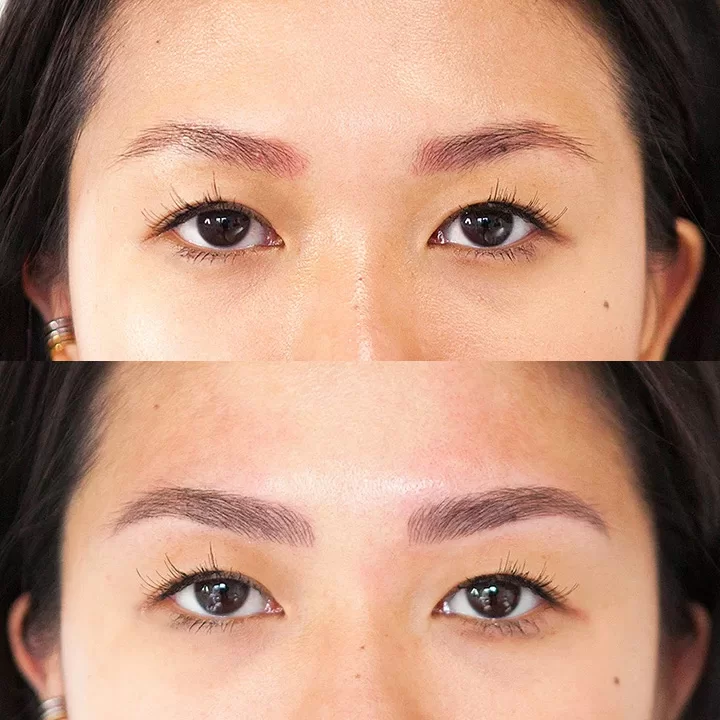
What Are Powder Brows (Ombré Brows)?
Powder brows, also known as ombré brows, are a popular choice for those who prefer a more polished, makeup-like finish. “Semi-permanent powder brows are created using a machine that deposits pigment in tiny dots, producing a soft, powdered makeup effect,” Sian explains.
The result is less about mimicking individual hairs and more about creating a softly filled-in brow that enhances shape and depth. The level of definition can be customised, making the treatment suitable for both subtle and more structured looks. Importantly, powder brows tend to perform well across a wide range of skin types, including oily and sensitive skin, where microblading may not retain as effectively.
How to Prepare for Semi-Permanent Eyebrows
Preparation plays a significant role in achieving the best possible outcome. In the days leading up to your appointment, certain adjustments can help ensure the skin is in optimal condition. “Clients are typically advised to avoid alcohol and caffeine for 24-48 hours beforehand,” says Sian. “You should also stop using retinol or active skincare around the brow area one week prior and avoid sun exposure or tanning.” It is also recommended to avoid waxing, tinting or threading the brows immediately before your appointment and to arrive with clean, makeup-free skin. Staying well hydrated can also support better healing and pigment retention.
Do Semi-Permanent Eyebrows Hurt?
Concerns around pain are common, particularly for first-time clients, but the reality is far more manageable than many expect. “Most clients describe the sensation as mild discomfort rather than pain,” says Sian. “A topical numbing cream is applied before and during the procedure, significantly reducing sensitivity.” While individual pain thresholds vary, the sensation is often compared to light scratching or gentle pressure. Some areas of the brow, particularly towards the tail, may feel slightly more sensitive, but overall the treatment is considered very tolerable.
Semi-Permanent Eyebrows Aftercare: What Not to Do
Aftercare is one of the most important aspects of the semi-permanent eyebrow process, directly impacting how well the pigment heals and how long the results last. “During the healing period, it’s important to avoid getting the brows wet for 7-10 days,” advises Sian.
You should also avoid touching, picking or scratching the treated area, as this can disrupt the healing process and affect pigment retention. Activities that cause excessive sweating, such as intense exercise, should be avoided, along with sun exposure, tanning beds and saunas. It is equally important to avoid applying makeup or skincare products directly to the brows and to stay away from swimming until the area has fully healed.
How Long Do Semi-Permanent Eyebrows Last?
One of the key benefits of semi-permanent eyebrows is their longevity, offering a long-lasting solution without the commitment of permanent tattooing. “Semi-permanent eyebrows typically last between 12 and 36 months,” says Sian.
The exact duration depends on several factors, including the technique used, your skin type, lifestyle habits, sun exposure and skincare routine. Rather than disappearing suddenly, the pigment fades gradually over time, allowing for subtle adjustments with future treatments. “Most people choose to have a colour refresh every 12-18 months to maintain their preferred shape and depth,” she explains.
Semi-permanent eyebrows offer a versatile, tailored approach to enhancing your natural features, whether you prefer the delicate realism of microblading or the soft definition of powder brows. With the right technique and expert guidance, the results can be both long-lasting and effortlessly natural. As Sian Dellar highlights, the key lies in understanding your skin, choosing a qualified practitioner and following the correct aftercare to ensure your brows look their best long after your appointment.
For those considering semi-permanent eyebrows, microblading or ombré powder brows, you can find more information or book a consultation with Sian Dellar via her website, permanentmakeup-specialist.com.