
Dame Judi Dench has backed a growing campaign to protect London’s green belt and public green spaces, warning that access to nature is increasingly under threat as developers target land once considered protected.
Her intervention comes as a new report from CPRE London (Campaign to Protect Rural England London) reveals that more than 50 parks, playing fields and green spaces across the capital are currently at risk from development or commercialisation.
The report, titled Cashing-in on London’s Parks and Countryside, highlights the growing pressure on Green Belt land, Metropolitan Open Land and local parks, with campaigners warning that policy changes have left previously protected land vulnerable to development.
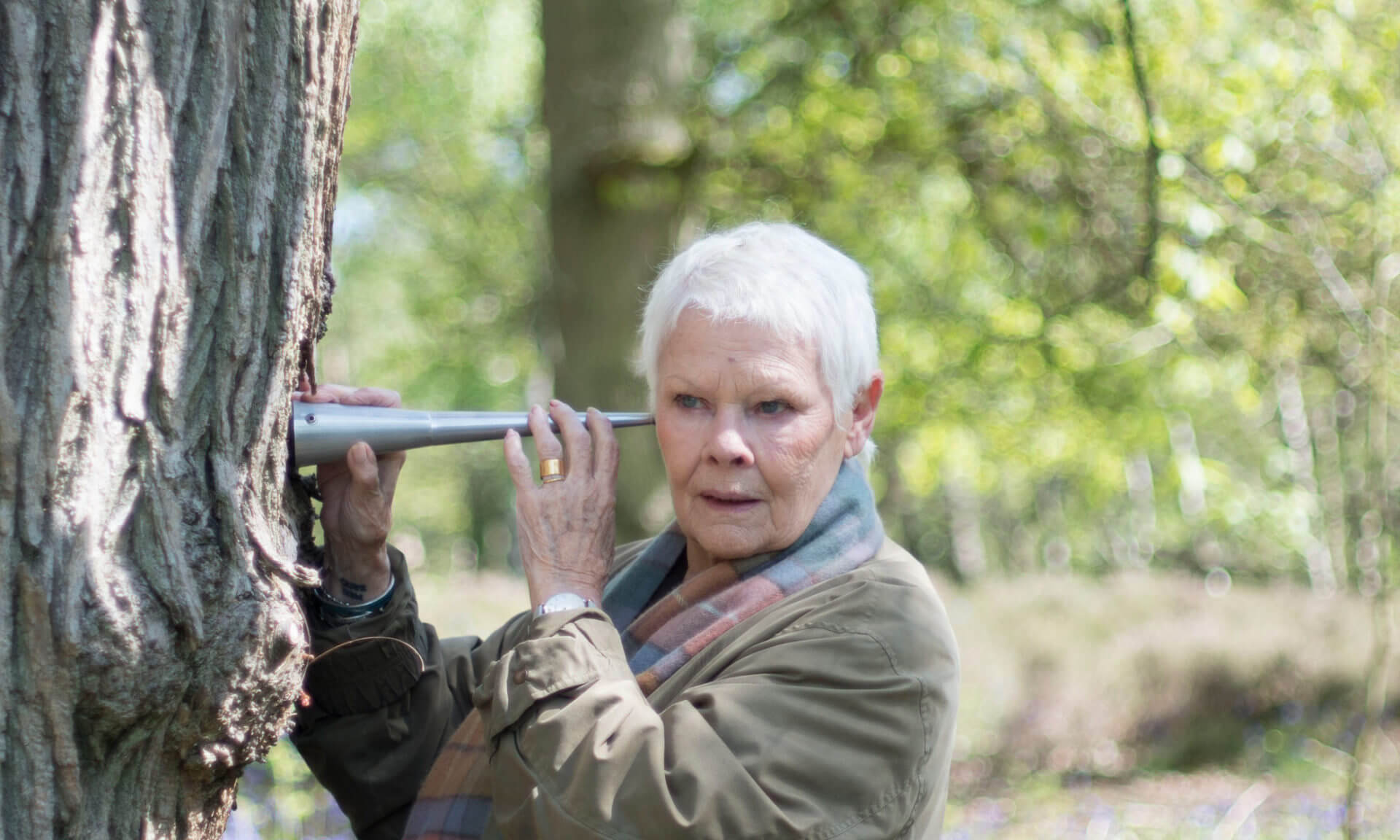
A long-time supporter of environmental causes and tree protection, Dame Judi Dench has spoken out in support of stronger safeguards for London’s parks and green spaces as the findings echo her own deeply personal connection to nature.
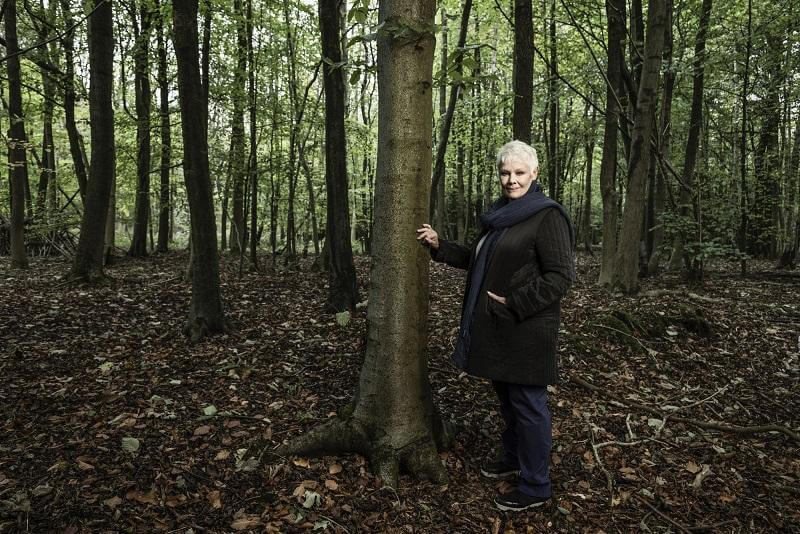
In 2017, the Oscar-winning actor fronted a BBC documentary exploring her lifelong love of trees and has previously shared that she plants a tree in memory every time a close friend or family member dies, including her late husband, Michael Williams.
She said: “I think of my trees as part of my extended family. It’s something living that goes on. You don’t remember them and stop, you remember them and the memory goes on and gets more wonderful.”
Protecting London’s Green Belt
The report by CPRE London finds that at least nine parks, eight playing fields and eight nature reserves across the city are under threat. Sites at risk include Whitewebbs Park in Enfield, Wimbledon Park and Green Dale Fields in Southwark, with recent proposals also leaving two large sites in Bromley’s Green Belt vulnerable.
While campaigning by CPRE London and local groups helped save six green spaces last year, including the pitches at Finsbury leisure centre in Islington, the report also found that seven sites were lost, among them Crossness nature reserve in Bexley.
Countryside campaigners have criticised the government for weakening protections for the green belt through new planning proposals, including the introduction of a so-called ‘grey belt’ policy, which allows some previously protected land to be reclassified for housing and infrastructure development.
One of the most contentious cases is Whitewebbs Park in Enfield, where the local council has agreed to lease part of the park to Tottenham Hotspur football club. The park was also the site of an ancient oak tree that was felled by contractors last year, prompting public outrage.
Dame Judi Dench, who is a supporter of the campaign group Guardians of Whitewebbs, said: “Staggeringly, ten percent of public land in Britain has been lost since 1979. Whitewebbs Park in Enfield is one of the public parks currently under threat.
“There is a 450-year-old oak tree was brutally butchered and Spurs’ plans to develop the park involve cutting down 207 trees, including veteran and mature trees, and taking over most of the park for their elite private use.
“It is absolutely essential for us to protect these trees and people’s access to nature. Campaign to Protect Rural England London is assisting the fight to save Whitewebbs and other sites currently under threat and it is clear to me that it is more important than ever to protect our parks and green spaces, before it’s too late.”
The campaign group Guardians of Whitewebbs, supported by Dench, has launched a judicial review in an attempt to overturn Enfield council’s decision to lease the land.
Elsewhere, there has been a long-running dispute over proposals by the All England Lawn Tennis Club to build a new stadium, ten private buildings and 38 tennis courts on part of Wimbledon Park, an area previously used as a golf course. Campaigners say the plans would significantly reduce public access to the park.
Similar concerns have been raised in Bromley, in south-east London despite its Kent postcode, over plans to build around 2,000 homes on Green Belt land in the area around Hayes Farm, south of Bromley Football Club. The proposals have prompted widespread opposition, with more than 10,000 people signing a petition citing the loss of green space, pressure on local infrastructure, concerns about groundwater and flooding, and the impact on trees and wildlife that inhabit the area, including birds, badgers, bats, deer and grazing horses, as well as the destruction of local biodiversity.
Alice Roberts, Head of Campaigns at CPRE London, said the past two years had brought new threats to public green space. “In the past two years, we’ve faced two new challenges. Almost unbelievably, a legal judgement confirmed that councils have unfettered powers to sell parks. Elsewhere, parks are being turned into commercial event spaces. If you think London’s parks are protected, think again.
“Second, the UK government has caved in to lobbying to remove Green Belt protection, introducing a ‘grey belt’ policy enabling landowners to cash-in on protected countryside land they bought cheaply years ago, despite wide-scale availability of brownfield land in London, including a staggering 300,000 homes with planning permission unbuilt.
“Councils are the custodians of public rights over parks. The law must be tightened so councils cannot treat them as financial assets to sell or rent when times are tough. We are also calling for an end to damaging ‘grey belt’ policy which is threatening Green Belt farmland.”