


On the hunt for the best palm oil-free Easter eggs in 2026? You’re not alone. In recent years, growing awareness of deforestation linked to palm oil production has led many shoppers to look more closely at the ingredients in their chocolate. Especially for Easter 2026, given that UK favourite Cadbury, long associated with milk chocolate and its ‘glass and a half of fresh milk’ promise, has now swapped the more expensive dairy fats for palm oil. Whether you’re looking for luxury chocolate eggs and ethical chocolate brands with palm oil-free chocolate or supermarket Easter eggs with no palm oil, we’ve rounded up the best Easter eggs for 2026.
Editor’s Picks: The Best Easter Eggs for 2026
- Best Luxury Easter Egg: Hotel Chocolat 1kg Everything Ostrich Easter Egg
- Best Unique Easter Egg: Hotel Chocolat 1kg Patisserie Ostrich Easter Egg
- Best Dairy-Free Easter Egg: Booja-Booja Chocolate Salted Caramel Large Easter Egg
- Best Vegan Easter Egg: Booja-Booja Hazelnut Crunch Large Easter Egg
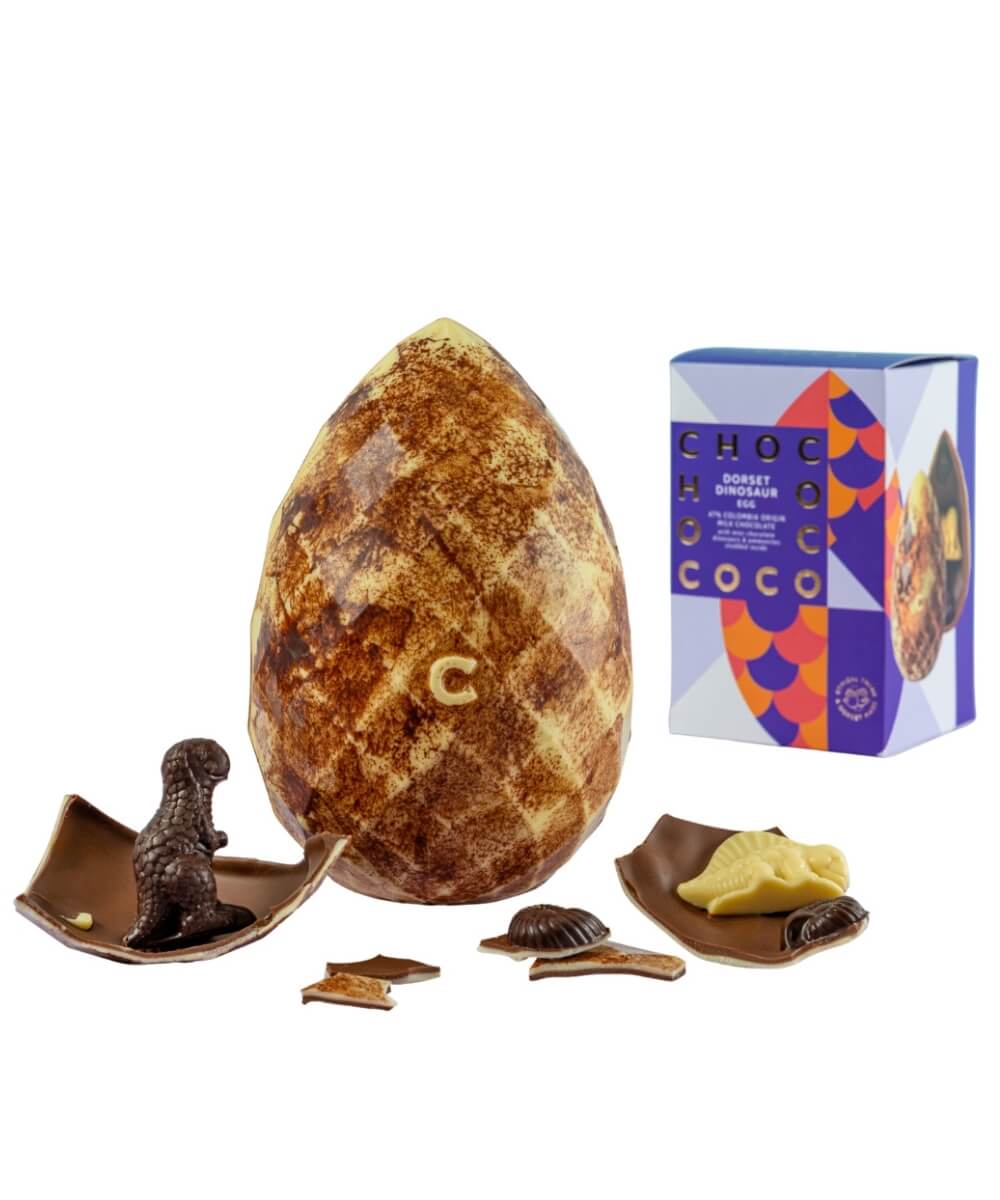
- Best Easter Egg for Kids: Chococo Giant Milk Chocolate Dorset Dinosaur Egg
- Best Budget Easter Egg: Tony’s Chocolonely Large Milk Chocolate Easter Egg
- Best Palm Oil-Free Mini Eggs: Divine Milk Chocolate Speckled Mini Eggs with Hazelnut Praline
Why Choose Palm Oil-Free Easter Eggs?
Palm oil is one of the most widely used vegetable oils in the world and appears in thousands of everyday products. It is commonly found in foods such as biscuits, cakes, margarine, spreads, ice cream and ready meals as well as snack foods including crisps and chocolate bars. Beyond food, palm oil is also widely used in household and personal care products, from soap and shampoo to toothpaste, makeup and cleaning products. In chocolate manufacturing, it is sometimes used as a cheaper substitute for cocoa butter or dairy fats, helping manufacturers reduce production costs while maintaining a smooth texture and longer shelf life.
However, palm oil production is highly controversial because of its environmental impact. Large areas of tropical rainforest, particularly in Indonesia and Malaysia (where the majority of the world’s palm oil is produced), have been cleared to make way for palm plantations. Environmental organisations have long warned that this expansion contributes to deforestation, biodiversity loss and habitat destruction for wildlife including orangutans, Sumatran tigers and Bornean elephants.
The environmental concerns surrounding palm oil production have also raised wider questions about food production and sustainability. Forest clearance linked to palm oil farming can contribute to increased carbon emissions, particularly when peatland forests are drained and burned. These fires release large amounts of greenhouse gases into the atmosphere and contribute to climate change.
Beyond environmental concerns, palm oil can also affect the quality of chocolate itself. Traditional chocolate recipes rely on cocoa butter (the natural fat found in cocoa beans), which gives chocolate its smooth texture, glossy finish and distinctive melt-in-the-mouth consistency. When manufacturers replace cocoa butter or dairy fats with vegetable oils such as palm oil, it can alter both the flavour and the overall quality of the chocolate. These highly processed oils are typically refined using heat and chemical extraction, stripping away natural compounds found in cocoa butter. They are also commonly used as cheaper fillers in processed foods, and diets high in refined vegetable oils have been linked to increased inflammation and harmful effects on metabolic health compared with natural fats.
For this reason, many premium and ethical chocolate brands make their chocolate without palm oil. Instead, they focus on traditional chocolate-making methods, high-quality cocoa and more transparent supply chains. This is particularly true among artisan chocolate makers, local chocolatiers and independent brands producing handmade chocolate, where recipes rely on cocoa, cocoa butter and high-quality ingredients rather than cheap vegetable oils. Choosing palm oil-free Easter eggs allows shoppers to support ethical chocolate brands that prioritise better ingredients and more sustainable chocolate production, while also responding to growing environmental concerns surrounding palm oil production.
As a result of becoming more informed about ingredients, many people are now actively seeking out Easter eggs in the same way they choose their chocolate, opting for brands that rely on traditional cocoa butter and more sustainable ingredients instead.
If you don’t know how to tell if chocolate contains palm oil, the easiest place to start is by checking the ingredients list. Not all Easter eggs contain palm oil but some cheaper chocolate products use it as a substitute for cocoa butter or dairy fats. For anyone trying to avoid it, reading the label carefully can help identify palm oil-free chocolate. Palm oil can appear on packaging under several different names, including palm oil, palm fat or palm kernel oil, and sometimes simply as vegetable oil. In general, chocolate made with traditional cocoa butter rather than vegetable oils is more likely to be palm oil-free.
Ethical Chocolate Brands Making Palm Oil-Free Chocolate
A growing number of ethical chocolate companies produce palm oil-free chocolate, choosing traditional cocoa butter recipes over cheaper vegetable oils. Many of these brands focus on higher-quality ingredients, transparent sourcing and more sustainable cocoa supply chains, which makes them a natural choice for shoppers looking for palm oil-free Easter eggs.
Tony’s Chocolonely
Among the best-known ethical chocolate brands is Tony’s Chocolonely. Founded in the Netherlands, the Dutch chocolate company was built around a mission to create 100% slave-free chocolate.
The company was originally created by investigative journalists who uncovered widespread exploitation in the cocoa industry and set out to prove that chocolate could be made differently. Tony’s works directly with cocoa cooperatives in Ghana and Côte d’Ivoire, paying farmers a higher price for their cocoa and investing in long-term partnerships designed to improve livelihoods and traceability across the supply chain.
The brand is known for its colourful packaging and unevenly divided chocolate bars, designed to highlight inequality within the global chocolate industry. Today, Tony’s Chocolonely is one of Europe’s leading ethical chocolate brands, producing chocolate bars, gift boxes and Easter eggs while advocating for greater transparency and fairness in cocoa sourcing.
Chococo
Artisan British chocolatier Chococo has built a strong reputation for producing handmade chocolate using high-quality ingredients and traditional chocolate-making methods. Founded in Dorset in 2002 by chocolatier Claire Burnet, the company began as a small independent chocolate business before growing into one of the UK’s best-known artisan chocolate makers, with boutiques and cafés across the south of England.
Chococo is particularly known for its focus on fine chocolate made with single-origin cocoa and natural ingredients, often highlighting the distinctive flavours of cacao sourced from different regions. The company places a strong emphasis on craftsmanship, producing chocolates in small batches and creating seasonal collections that showcase both classic chocolate recipes and more inventive flavour combinations.
The brand is also firmly palm-oil free, working only with chocolate made using cocoa butter rather than vegetable fats. This approach reflects Chococo’s broader philosophy of using simple, high-quality ingredients while maintaining greater transparency around chocolate production.
Alongside its chocolate bars, truffles and filled chocolates, Chococo produces a wide range of seasonal collections throughout the year. Its Easter range typically includes handcrafted chocolate eggs and luxury gift boxes made using high-quality cocoa and traditional chocolate-making techniques, making the brand a popular choice for those looking for artisan palm oil-free Easter chocolate.
Divine Chocolate
Ethical chocolate company Divine Chocolate stands out in the global chocolate industry because of its unique ownership structure. The company is co-owned by cocoa farmers through the Kuapa Kokoo cooperative in Ghana, meaning the farmers who grow the cocoa beans also hold shares in the business and have a voice in how the company operates.
Founded in 1998, Divine was created to challenge the traditional chocolate supply chain, where cocoa farmers often receive only a small portion of the final retail price of chocolate products. By working directly with farmer-owned cooperatives and producing chocolate using Fairtrade-certified cocoa, the brand aims to ensure farmers receive a more equitable share of the profits while also promoting greater transparency within the industry.
Like many ethical chocolate makers, Divine produces chocolate without palm oil, relying instead on cocoa butter and simple ingredients. Its chocolate range includes classic milk and dark chocolate bars as well as seasonal collections released throughout the year. At Easter, the brand releases chocolate eggs and gift sets that combine traditional chocolate flavours with its strong ethical credentials, making Divine a popular choice for those looking for Easter chocolate with a clear social impact behind it.
Montezuma’s
British chocolate company Montezuma’s has built a reputation for bold flavours and a slightly rebellious approach to chocolate-making. Founded by husband-and-wife team Helen and Simon Pattinson in Brighton, the brand began as a small seaside chocolate shop before growing into one of the UK’s best-known independent chocolate makers. Over the years Montezuma’s has become known for pushing beyond traditional chocolate flavours, experimenting with combinations such as chilli-infused chocolate, dark chocolate with lime, and inventive seasonal creations.
The company has also developed a loyal following for its playful approach to chocolate, regularly experimenting with flavour combinations that go beyond traditional chocolate bars. Today its range includes everything from classic milk and dark chocolate truffles to peanut butter chocolate and more adventurous creations featuring ingredients such as chilli or citrus.
Alongside its everyday chocolate range, Montezuma’s releases a wide selection of Easter treats each year, including chocolate eggs and seasonal gift boxes. These often feature the brand’s signature bold flavours as well as more traditional options, making them popular with those looking for something a little different from standard supermarket Easter eggs.
Seed & Bean
Organic chocolate brand Seed and Bean has built a reputation for combining sustainability with inventive flavour combinations. Founded in the UK, the company focuses on organic ingredients, responsibly sourced cocoa and environmentally conscious packaging designed to reduce waste.
Seed & Bean is particularly known for its creative approach to chocolate flavours, pairing organic chocolate with ingredients such as coconut, lavender, lemon, raspberry or Himalayan salt. These distinctive combinations have helped the brand stand out within the organic chocolate market, offering chocolate that feels both inventive and environmentally conscious.
The company also places a strong emphasis on sustainability beyond ingredients. Many of its chocolate bars are wrapped in compostable packaging, reflecting the brand’s broader commitment to reducing environmental impact throughout the production process.
Today Seed & Bean chocolate is widely stocked in organic food shops, independent grocers and specialist retailers across the UK. Alongside its everyday chocolate bars, the brand releases seasonal collections throughout the year, including palm oil-free Easter eggs designed for those seeking organic, sustainably produced chocolate made with simple ingredients.
Booja-Booja
Luxury chocolate company Booja-Booja has developed a strong reputation for its rich chocolate truffles and distinctive presentation. Founded in Norfolk, the brand specialises in organic chocolate that is both dairy-free and vegan, producing indulgent chocolate using ingredients such as cocoa, coconut and natural flavourings rather than traditional dairy.
Booja-Booja’s chocolate truffles have won numerous awards over the years, helping establish the brand as one of the UK’s best-known producers of premium vegan chocolate. Its products are often packaged in beautifully illustrated boxes that have become part of the brand’s signature style, giving Booja-Booja chocolates a gift-like quality that stands out on shop shelves.
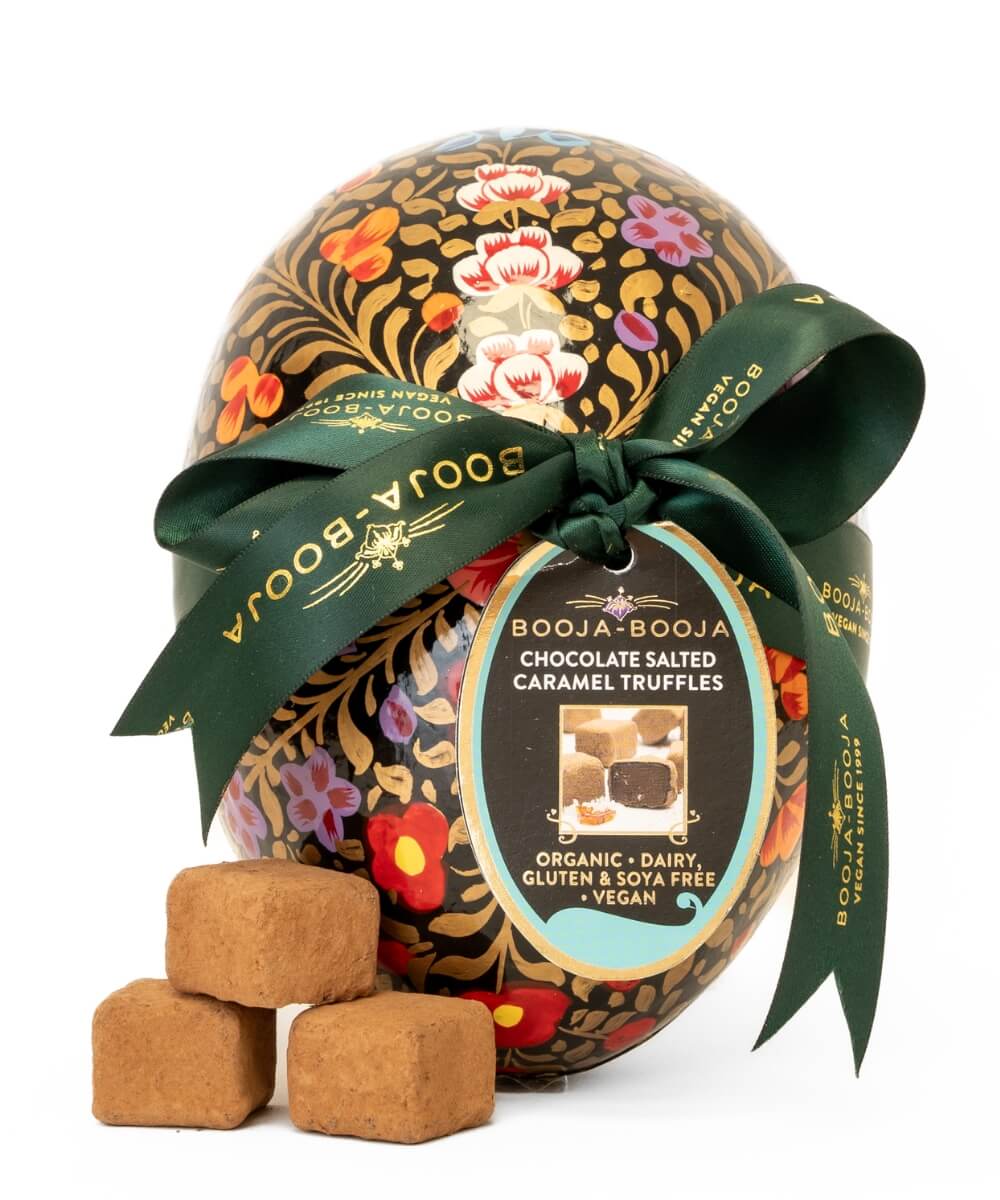
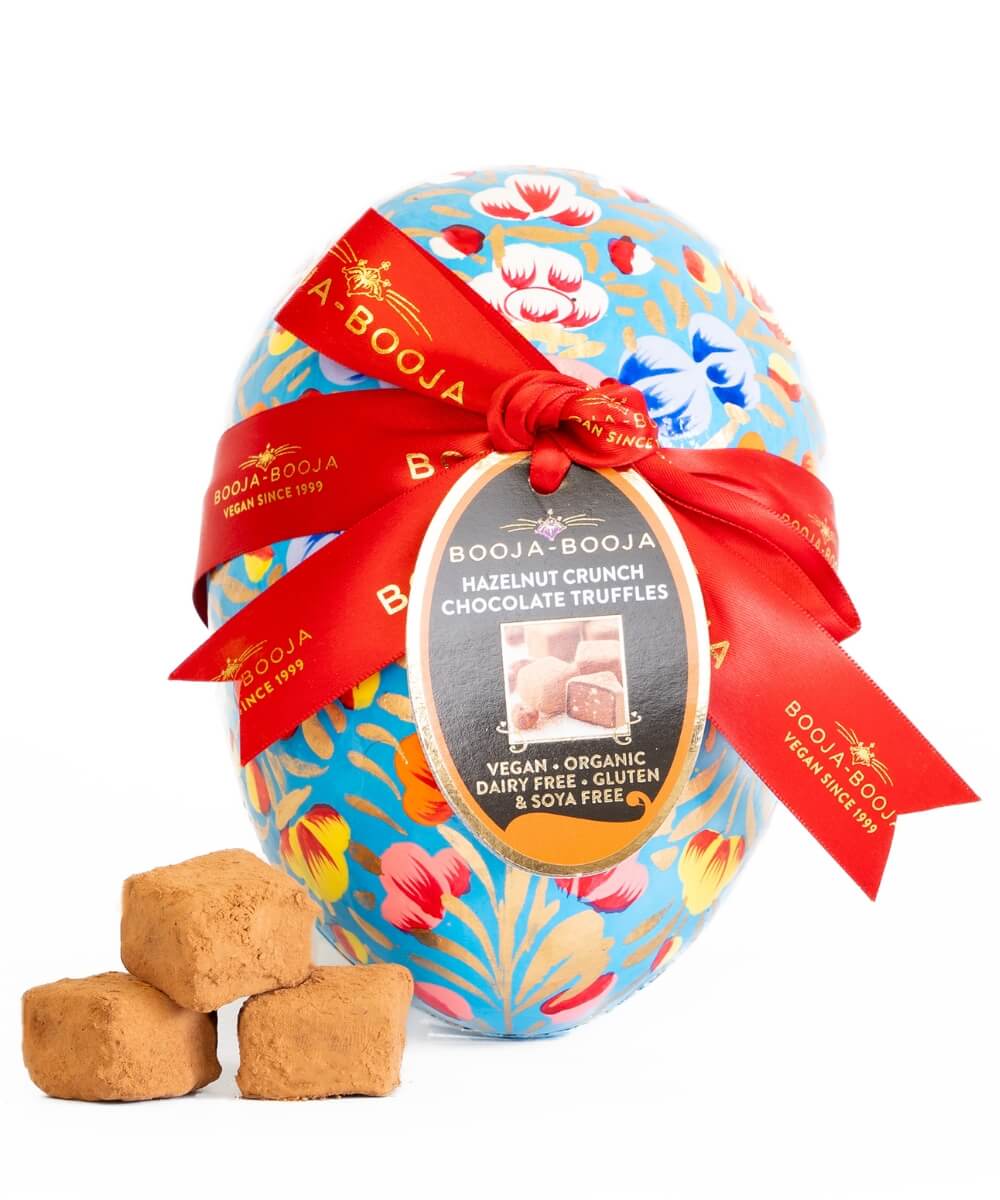
At Easter, the company releases a range of decorative chocolate eggs that differ from the traditional hollow egg format. Booja-Booja Easter eggs are typically presented in reusable keepsake boxes filled with a selection of the brand’s signature truffles, making them a popular choice for those looking for dairy-free Easter eggs or a more unusual Easter chocolate gift.
Ombar
British chocolate company Ombar takes a slightly different approach to chocolate-making, focusing on organic cacao and minimal processing. Founded in the UK, the brand is known for producing chocolate that aims to retain more of the natural characteristics of the cocoa bean, often using unroasted cacao and simple ingredient lists compared with more conventional chocolate.
Ombar has built a strong following among consumers interested in organic and plant-based chocolate. Many of its bars are made with coconut cream rather than dairy, creating a creamy texture while remaining vegan. The brand has also become known for experimenting with contemporary flavour trends, including pistachio chocolate, fruit-infused varieties and nut-based recipes that appeal to those looking for something slightly different from traditional milk or dark chocolate bars.
Today Ombar chocolate is widely stocked in health food shops, organic retailers and specialist grocers across the UK and Europe. Its focus on vegan chocolate, organic certification and minimally processed cacao has helped position the company as a popular choice for those seeking organic, plant-based or more natural chocolate options.
Hotel Chocolat
Premium British chocolate brand Hotel Chocolat has become one of the most recognisable names in the UK chocolate industry. Founded in 2004 by Angus Thirlwell and Peter Harris, the company set out to create chocolate with a higher cocoa content than many mainstream confectionery brands, positioning itself as a more premium alternative to traditional high-street chocolate.
From its early days as an online chocolate retailer, Hotel Chocolat quickly expanded into physical retail and now operates dozens of boutique-style shops across the UK. These stores are designed to feel more like specialist chocolate boutiques than conventional confectionery shops, offering curated displays of chocolate collections, seasonal gifts and tasting experiences.
Alongside its retail stores, the brand also runs the Hotel Chocolat Tasting Club, a popular subscription service that delivers curated selections of chocolate to members several times a year. The club has become a key part of the company’s identity, allowing the brand to introduce customers to new flavour combinations, limited-edition collections and seasonal creations.
Hotel Chocolat has also invested heavily in understanding the cocoa supply chain. The company operates its own cacao estate, Rabot Estate, in Saint Lucia, giving it direct involvement in the cultivation of cocoa beans and greater control over sourcing and quality. This ‘tree-to-bar’ approach has helped reinforce the brand’s reputation as a premium chocolate maker with a deeper connection to cocoa production.
Hotel Chocolat releases extensive seasonal collections throughout the year, including Christmas, Valentine’s Day and Easter ranges. Its Easter collection in particular has become a major part of the brand’s offering, featuring elaborate chocolate eggs, filled eggs and beautifully packaged luxury gift sets designed to feel more indulgent than typical shop-bought Easter chocolate.
Best Palm Oil-Free Easter Eggs for 2026
Tony’s Chocolonely Large Milk Chocolate Easter Egg
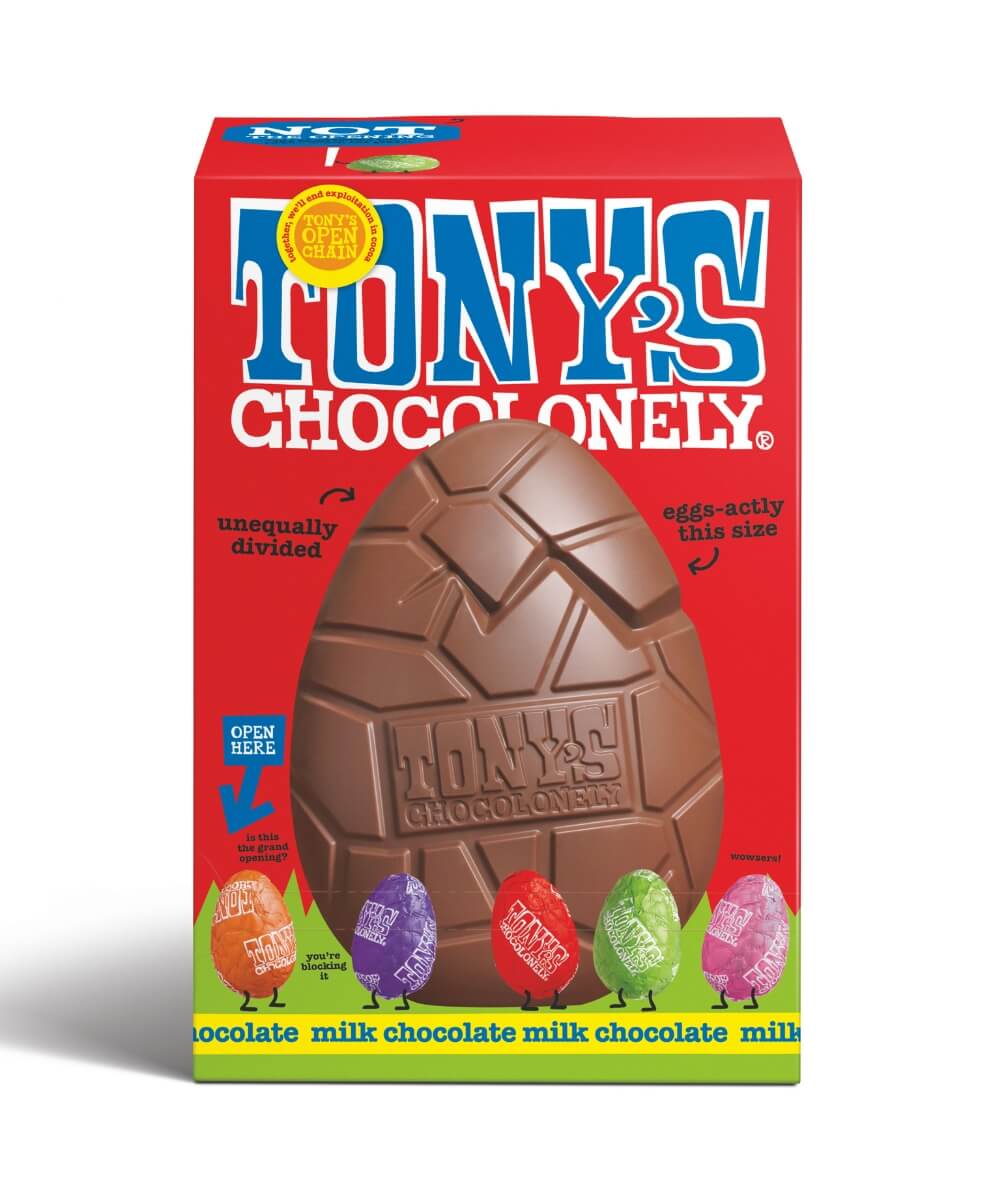
If you’re looking for a fun, budget-friendly Easter egg for kids, the Tony’s Chocolonely Large Chocolate Easter Egg is packed with flavour and personality. The hollow milk chocolate egg comes with a colourful mix of mini eggs inside, featuring flavours like milk caramel sea salt, milk pretzel toffee, white chocolate raspberry popping candy and dark chocolate almond sea salt, alongside classic milk chocolate. It’s designed for cracking open and sharing, with each mini egg offering something a little different. Made with Fairtrade cocoa, 100% traceable beans and no palm oil, Tony’s Chocolonely is known for its mission to make chocolate more ethical by pushing the industry towards a fairer cocoa supply chain – making this a great-value Easter egg that still delivers on flavour and impact.
Hotel Chocolat 1kg Everything Ostrich Easter Egg
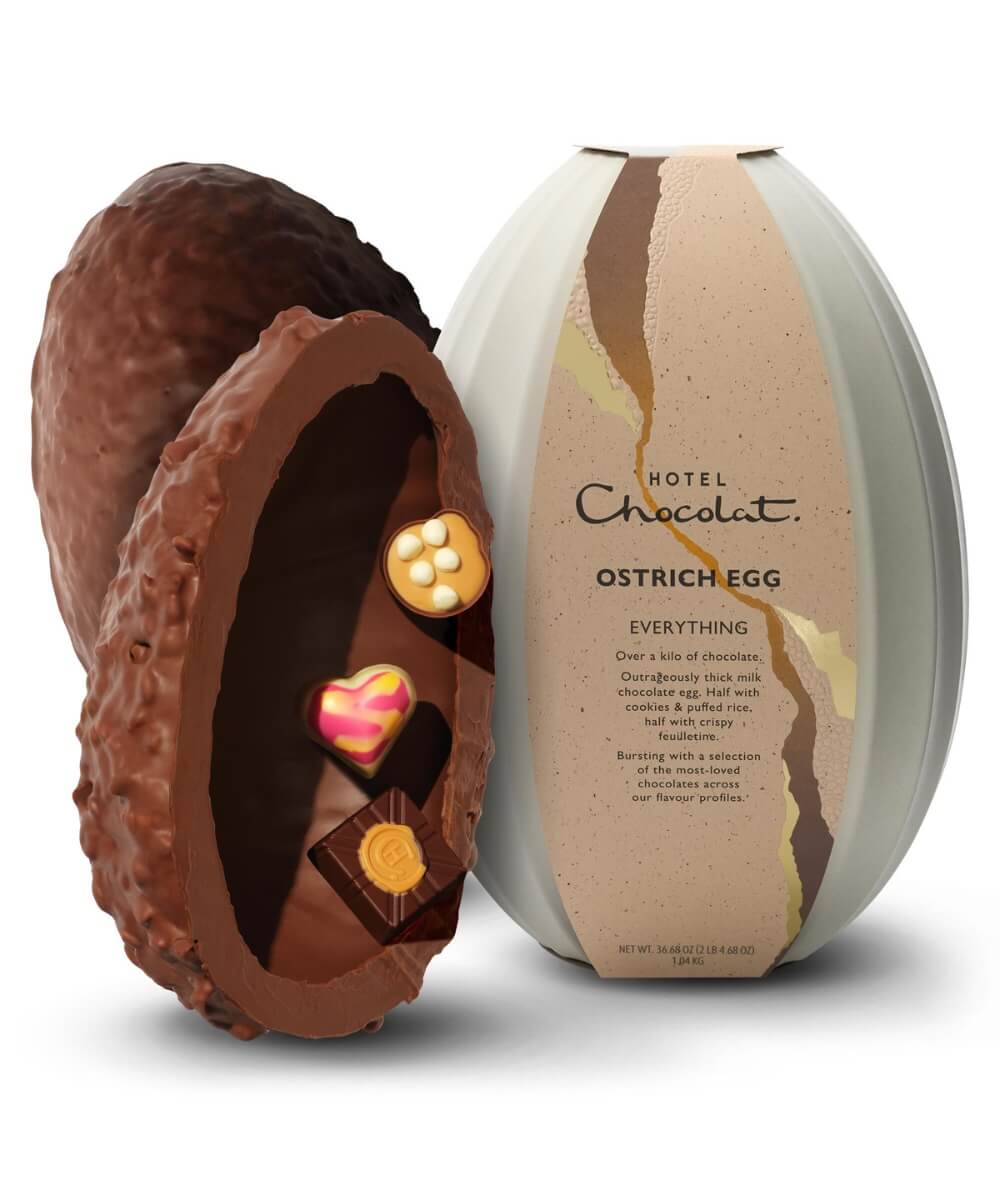
If you want to go big this Easter, the Hotel Chocolat Everything Ostrich Easter Egg is designed to impress. Inspired by the largest egg in the natural world, the brand’s chocolatiers even measured a real ostrich egg to perfect the scale of this one-kilogram chocolate centrepiece. The extra-thick shell combines two styles of milk chocolate – one half 40% milk chocolate with crunchy cookie pieces and puffed rice, the other 50% milk chocolate with crispy feuilletine. Inside, the egg is packed with a generous selection of Hotel Chocolat favourites, including Champagne Truffles, Chairman’s Rum Truffles, Trillionaire’s Shortbread, Strawberry Cheesecake and Salted Caramel chocolates, making it a generous Easter gift that couples and families can enjoy sharing. The egg comes in the brand’s new cacao paper shell packaging, made using parts of the cacao plant that would otherwise go to waste and fully recyclable and compostable at home.
Happi Oat Milk Chocolate Egg Pistachio Crunch
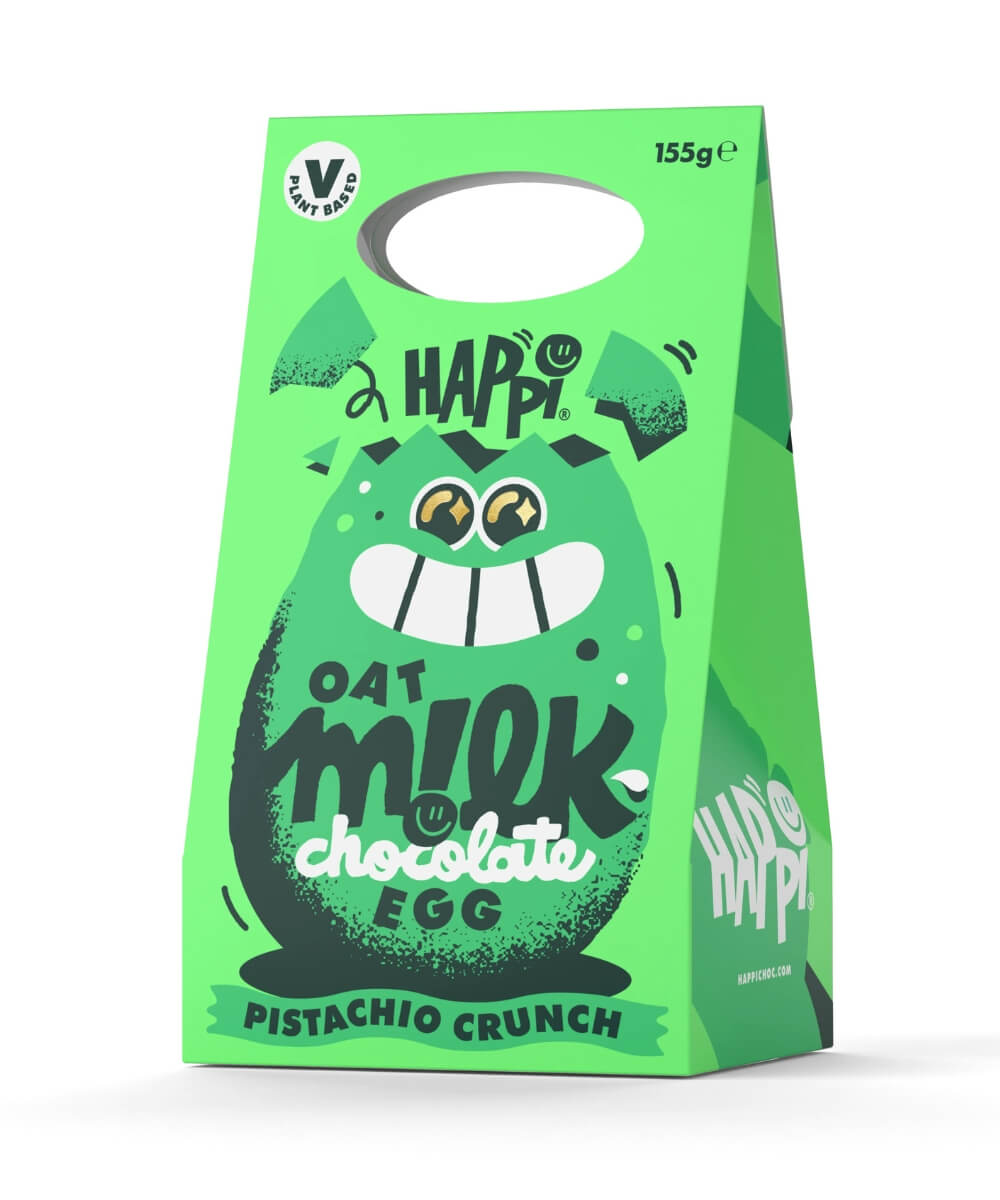
For those who are dairy-intolerant and looking for a dairy-free Easter egg, the new Happi Oat Milk Chocolate Pistachio Crunch Easter Egg taps into the pistachio chocolate trend. Made with creamy oat milk chocolate and single-origin Colombian cacao, the egg delivers a smooth, rich flavour without any dairy, while crunchy pistachio pieces and shards of kadayif pastry add a satisfying nutty texture. The brand focuses on more responsible chocolate too, sourcing cacao directly from Colombian farmers to ensure fair pay and full traceability. Plant-based, palm oil-free and packaged without single-use plastic, this oat milk chocolate egg offers a thoughtful option for anyone seeking a vegan Easter egg that still feels indulgent.
Chococo Giant Milk Chocolate Dorset Dinosaur Egg
Booja-Booja Chocolate Salted Caramel Large Easter Egg
Cox&Co Cacao 60% Bee Pollen & Honey Easter Egg
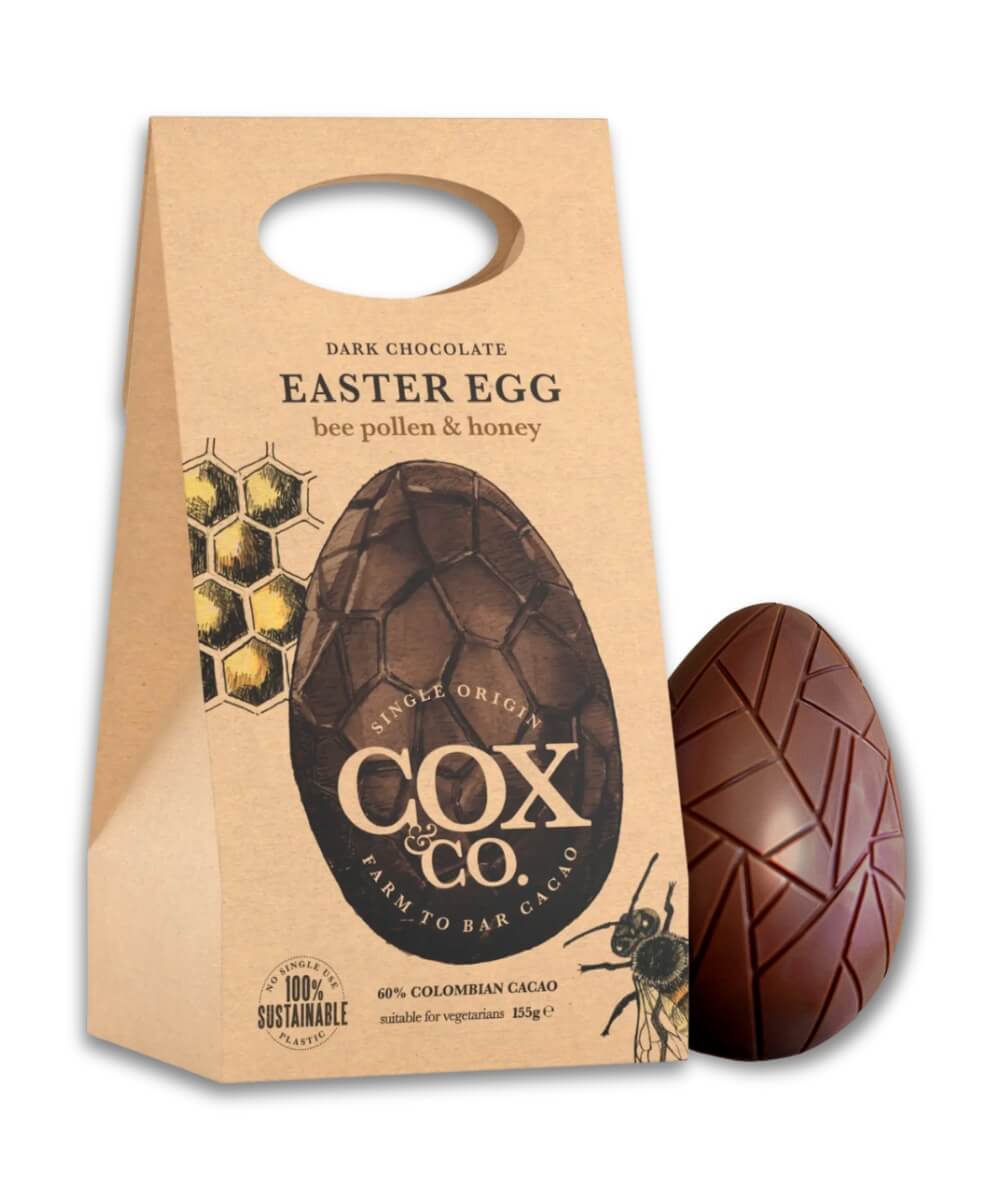
For something a little different this Easter, the Cox & Co 60% Bee Pollen & Honey Easter Egg offers an unusual flavour pairing. Made with 60% single-origin Colombian dark chocolate, it blends natural honey flavour with a sprinkling of bee pollen, creating a rich dark chocolate base with gentle sweetness and subtle floral notes. The brand was founded by Gavin Cox, who drew on time spent in South America to source high-quality cacao and build direct relationships with Colombian producers. The egg is palm oil-free and vegetarian, and comes in plastic-free packaging that is fully recyclable and home-compostable, making it a thoughtful choice for those looking for a more ethical Easter chocolate gift.
Booja-Booja Hazelnut Crunch Large Easter Egg
Divine Luxury Milk Chocolate Speckled Mini Eggs with Hazelnut Praline
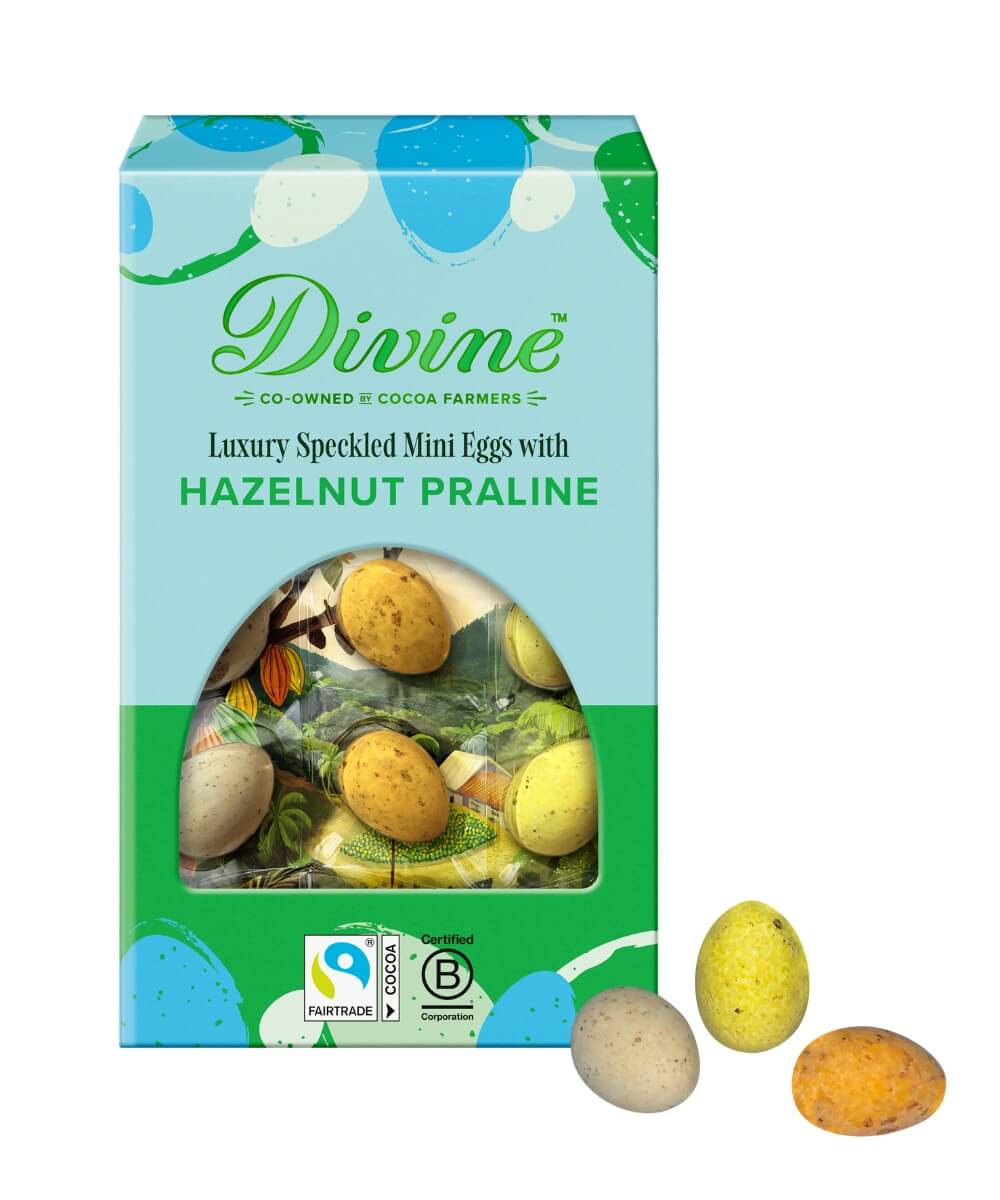
For those who love Cadbury Mini Eggs but want a palm oil-free alternative, the Divine Chocolate Luxury Milk Chocolate Speckled Mini Eggs with Hazelnut Praline are a deliciously more ethical option. These delicate, speckled milk chocolate eggs deliver a satisfying snap before giving way to a silky hazelnut praline centre, where rich cocoa notes blend with a smooth, nutty sweetness. Divine uses high-quality Fairtrade cocoa, giving the chocolate a richer flavour while ensuring farmers receive fair prices and a share of the profits. The brand is also co-owned by cocoa farmers and has been B Corp certified since 2018, reflecting its commitment to transparency and responsible chocolate making. Made with natural ingredients and avoiding monoculture crops such as palm and soy, these praline-filled mini eggs feel like a thoughtful upgrade on the nostalgic Easter favourite.
Hazel Mountain Chocolate Pistachio and Raspberry 42% Milk Chocolate Easter Egg
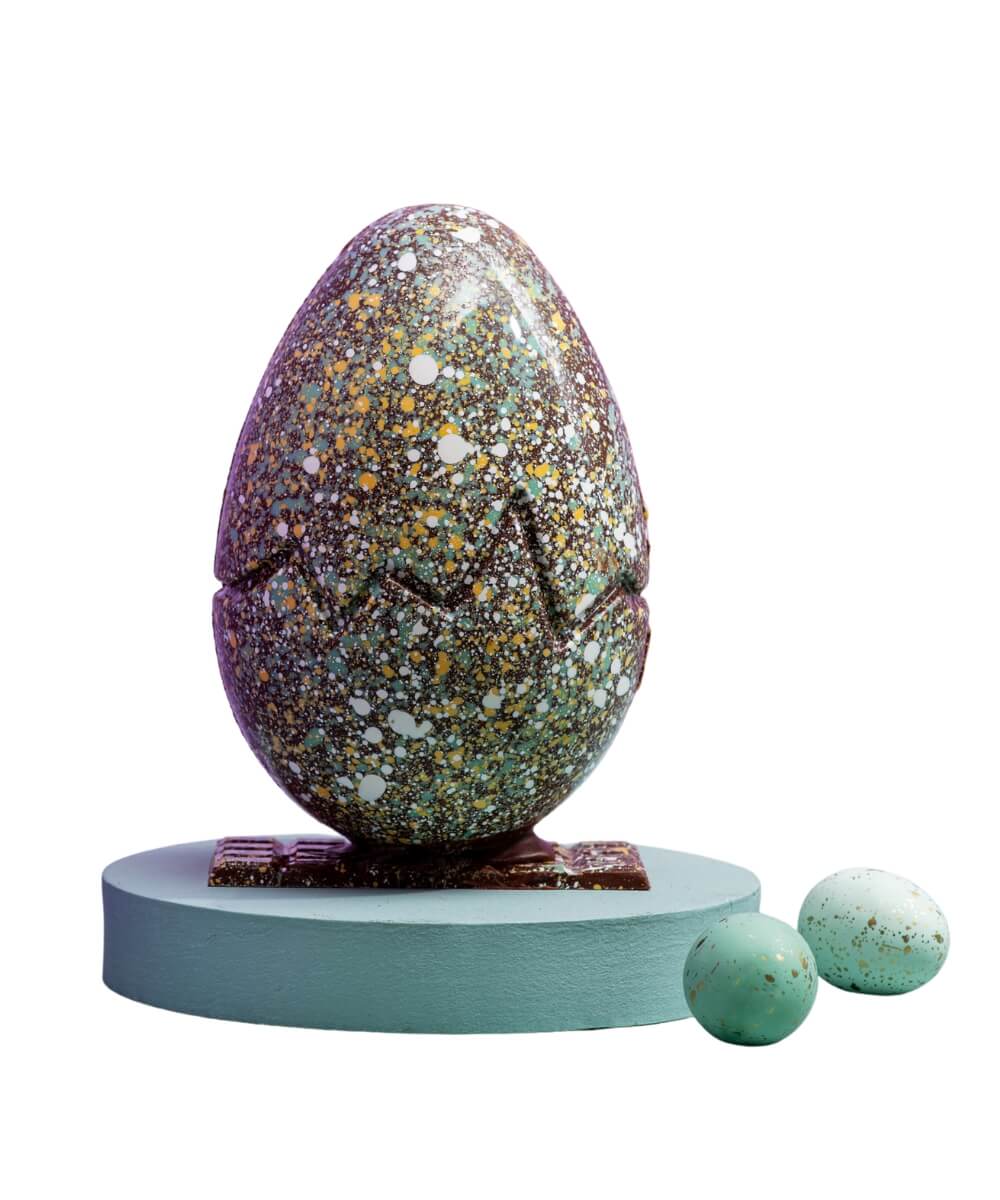
Tapping into the growing trend for pistachio chocolate, the Hazel Mountain Chocolate Pistachio and Raspberry 42% Milk Chocolate Easter Egg is a standout choice for this Easter. Made using the brand’s own 42% milk chocolate crafted from cacao beans sourced in Cuba, the egg is lined with caramelised pistachios, tangy raspberry pieces and crunchy honeycomb for a satisfying mix of creamy chocolate, nutty richness and bright fruit notes. Hazel Mountain is Ireland’s only bean-to-bar chocolate factory, meaning every stage of productionn, from roasting the cacao beans to making the finished chocolate, happens in its boutique factory in the Burren, Co. Clare, along the Wild Atlantic Way. Finished with splashes of cocoa butter and a cracked design that makes it easy to divide and share, it reflects the brand’s focus on simple ingredients, sustainable sourcing and carefully crafted chocolate.
COCO Chocolatier Marc de Champagne Truffles Egg Tin
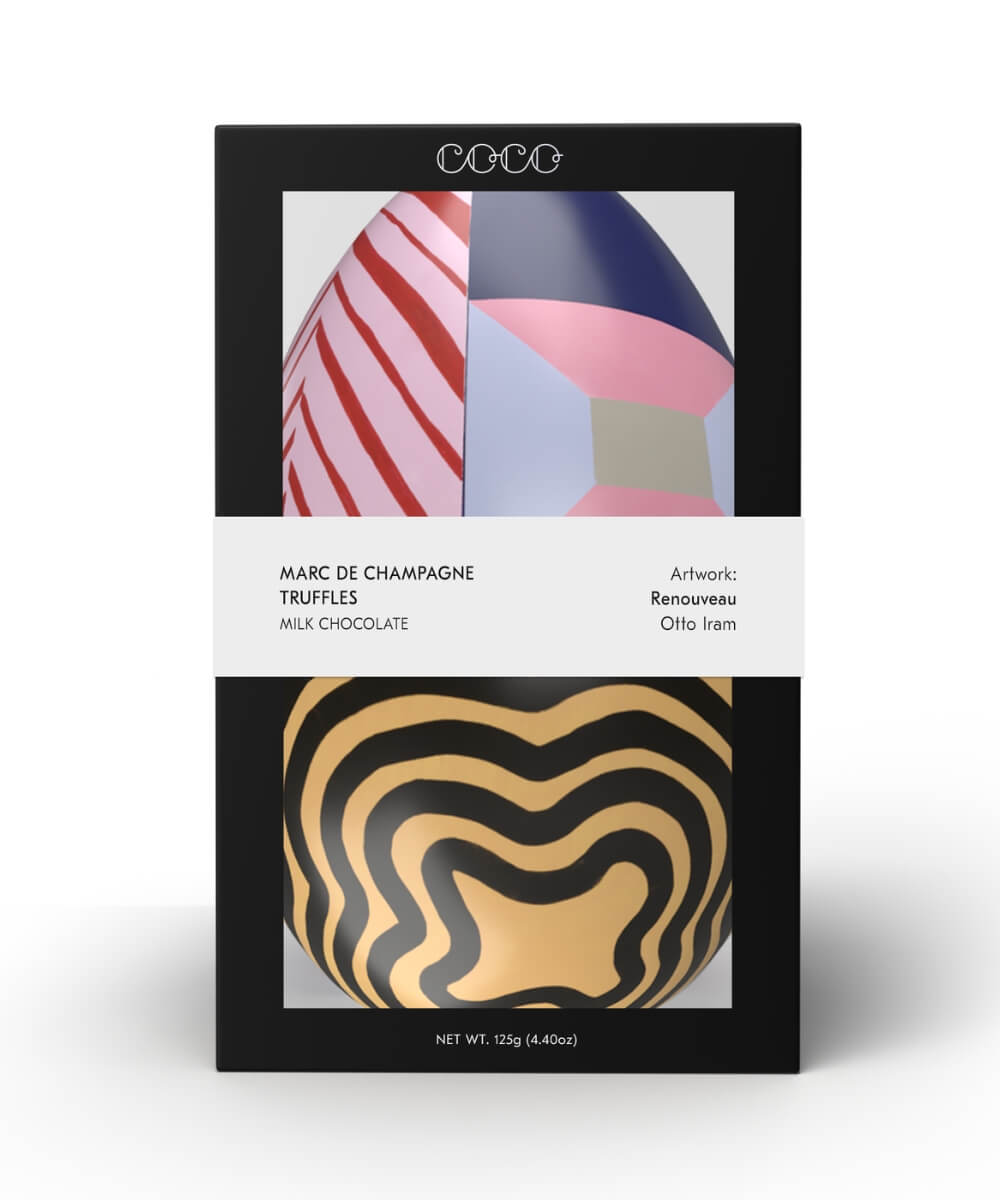
If you’re looking for something a little different from the traditional Easter egg, the Coco Chocolatier Marc de Champagne Truffle Egg Tin makes a thoughtful Easter chocolate gift. Instead of a hollow egg, this beautifully designed tin opens to reveal indulgent milk chocolate truffles filled with a silky white chocolate Marc de Champagne ganache, offering a rich, creamy centre with a subtle champagne note. Made with cocoa sourced from Colombia and crafted in Edinburgh, Coco Chocolatier blends small-batch chocolate making with bold artistic design, with the reusable egg-shaped tin featuring artwork by Otto Iram. Palm oil-free and vegetarian, the truffles presented in an art-inspired egg tin feel a little more special than a standard Easter egg.
Hazel Mountain Chocolate Wild Atlantic Easter Egg
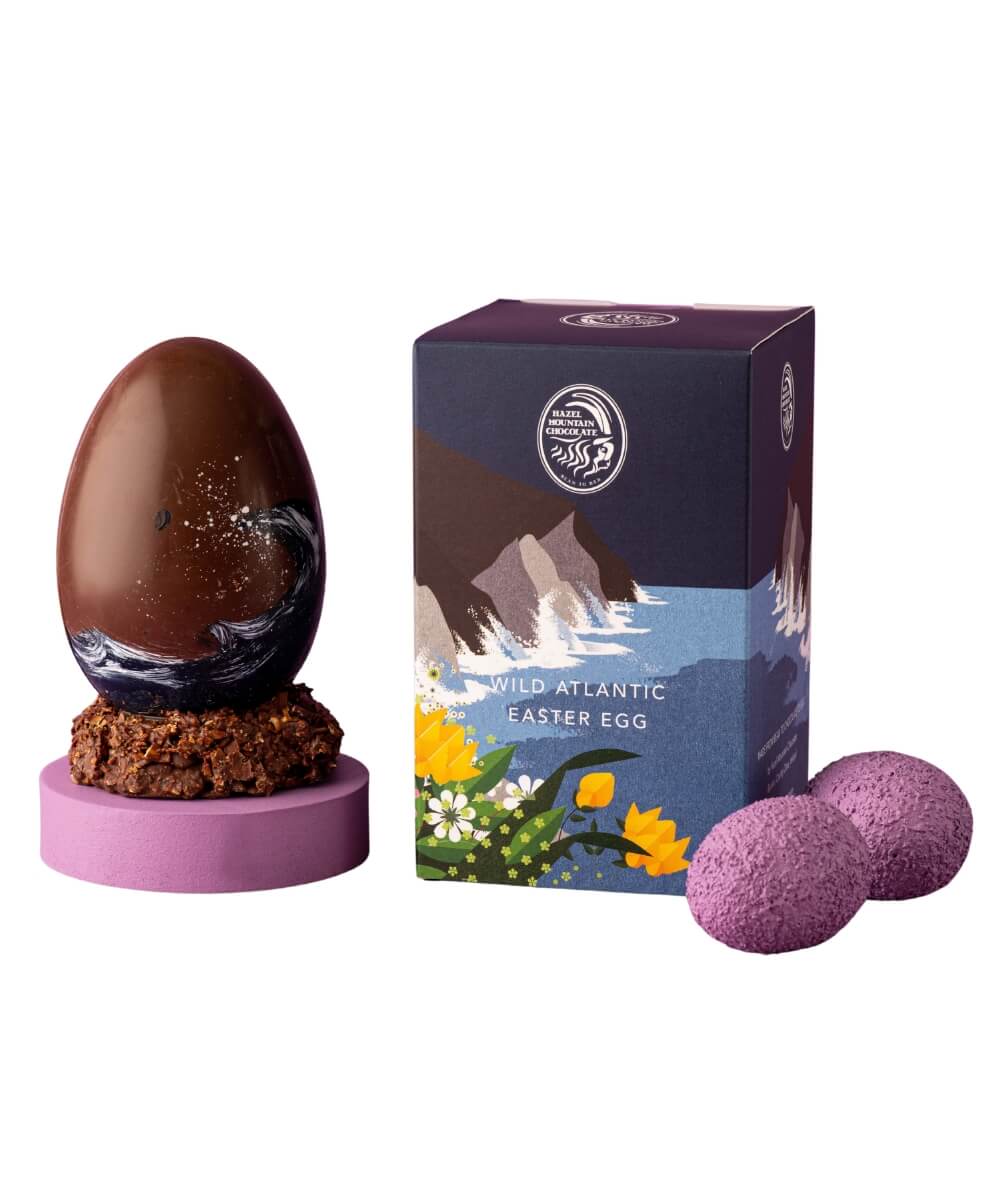
Inspired by the landscape and nature of the West of Ireland, the Hazel Mountain Chocolate Wild Atlantic Easter Egg is crafted from the brand’s pure bean-to-bar chocolate, with artistic wave designs that capture the beauty and lively spirit of the Wild Atlantic Way. The milk chocolate version is made with 42% Cuban cacao, with the same sugar content as dark chocolate and natural notes of vanilla and banana. There’s also a dark chocolate version made with Bolivian cacao, known for its fruity, smoky layers that appeal to dark chocolate lovers. Limited edition and hand painted, it’s a striking Easter egg that reflects Hazel Mountain’s small-batch craft chocolate approach.
Hotel Chocolat 1kg Patisserie Ostrich Easter Egg
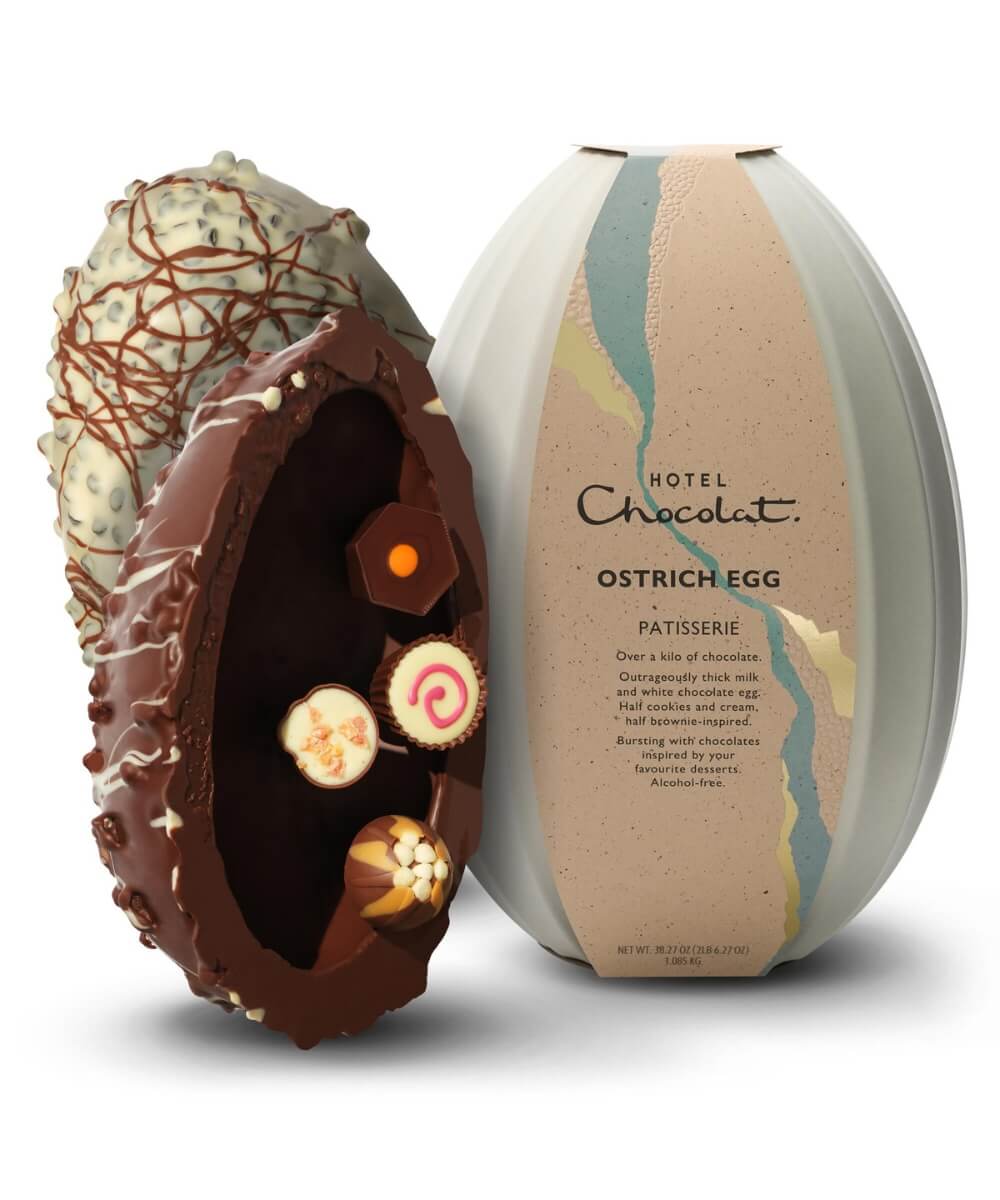
If you’re looking for the best luxury Easter egg that truly makes a statement, the Hotel Chocolat Patisserie Ostrich Easter Egg delivers on scale and indulgence. Weighing in at over one kilogram of chocolate, this extra-thick egg is inspired by the world’s largest egg with chocolatiers even measuring a real one to perfect its impressive proportions. One half is 40% milk chocolate swirled with cookies and draped in white chocolate, while the other features 50% milk chocolate packed with pecan pieces, praline and cookie chunks. Inside, you’ll find a generous collection of Hotel Chocolat’s patisserie-inspired chocolates, including flavours like Carrot Cake, Billionaire’s Shortbread, Tiramisu and Strawberry Cheesecake. Presented in an elegant cacao paper shell made using parts of the cacao plant that would otherwise go to waste, the packaging is fully recyclable and home-compostable, making this showstopping luxury Easter gift ideal for serious chocolate and dessert lovers.
Love Cocoa Salted Caramel Milk Chocolate Easter Egg
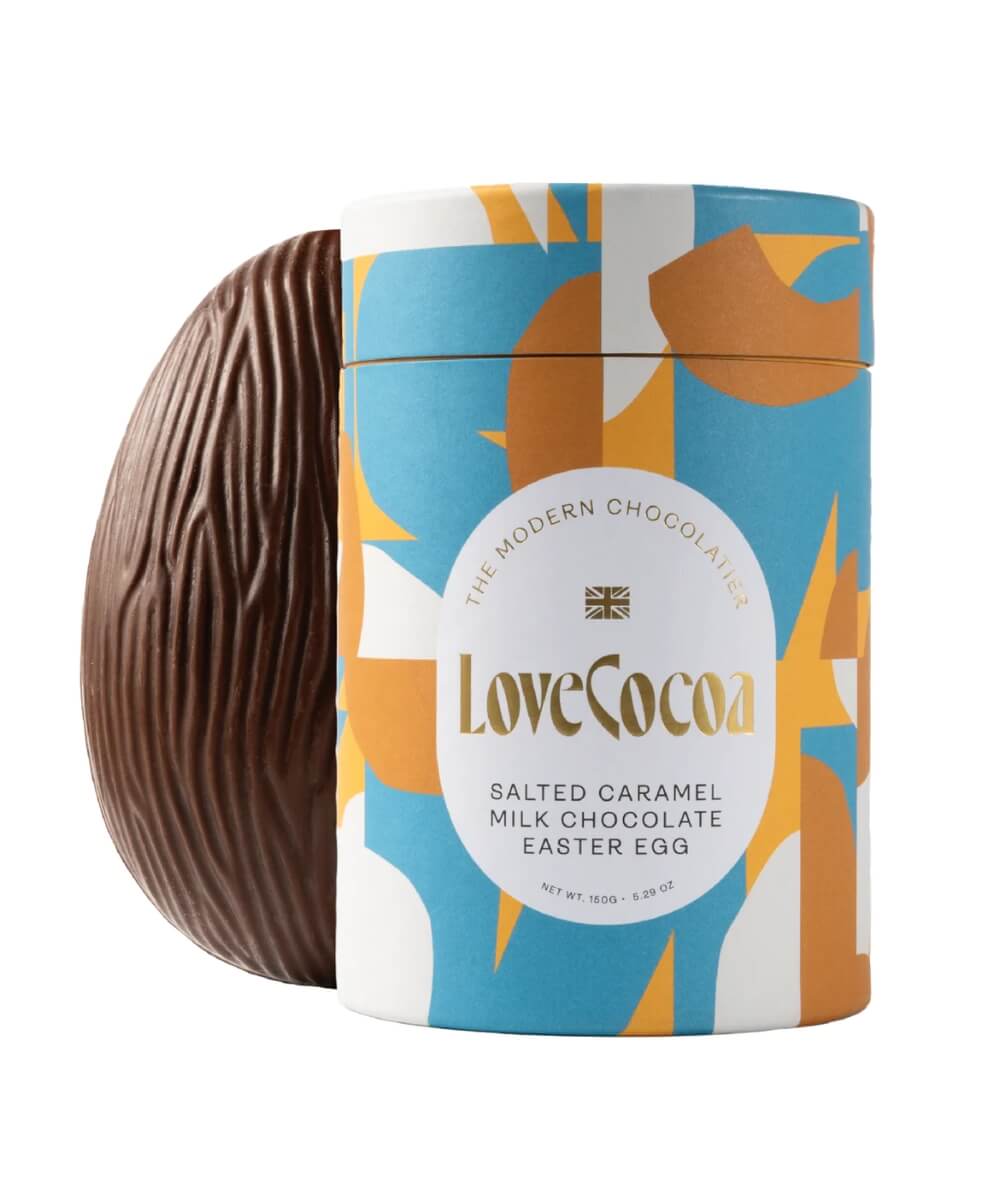
The Love Cocoa Salted Caramel Milk Chocolate Easter Egg is a great pick for anyone who loves salted caramel chocolate. Inspired by the brand’s best-selling salted caramel chocolate bar, it blends smooth Colombian milk chocolate with buttery caramel and a touch of sea salt, creating that classic sweet-and-salty balance. Founded by James Cadbury, the great-great-great grandson of John Cadbury, Love Cocoa focuses on responsibly made chocolate, with much of its cocoa processed at origin in Colombia to help farming communities retain more value from their work. The egg is also palm oil-free, vegetarian and packaged without plastic, making it a thoughtful choice for those looking for a more ethical Easter chocolate egg.
The Nook Cheltenham Midi Egg
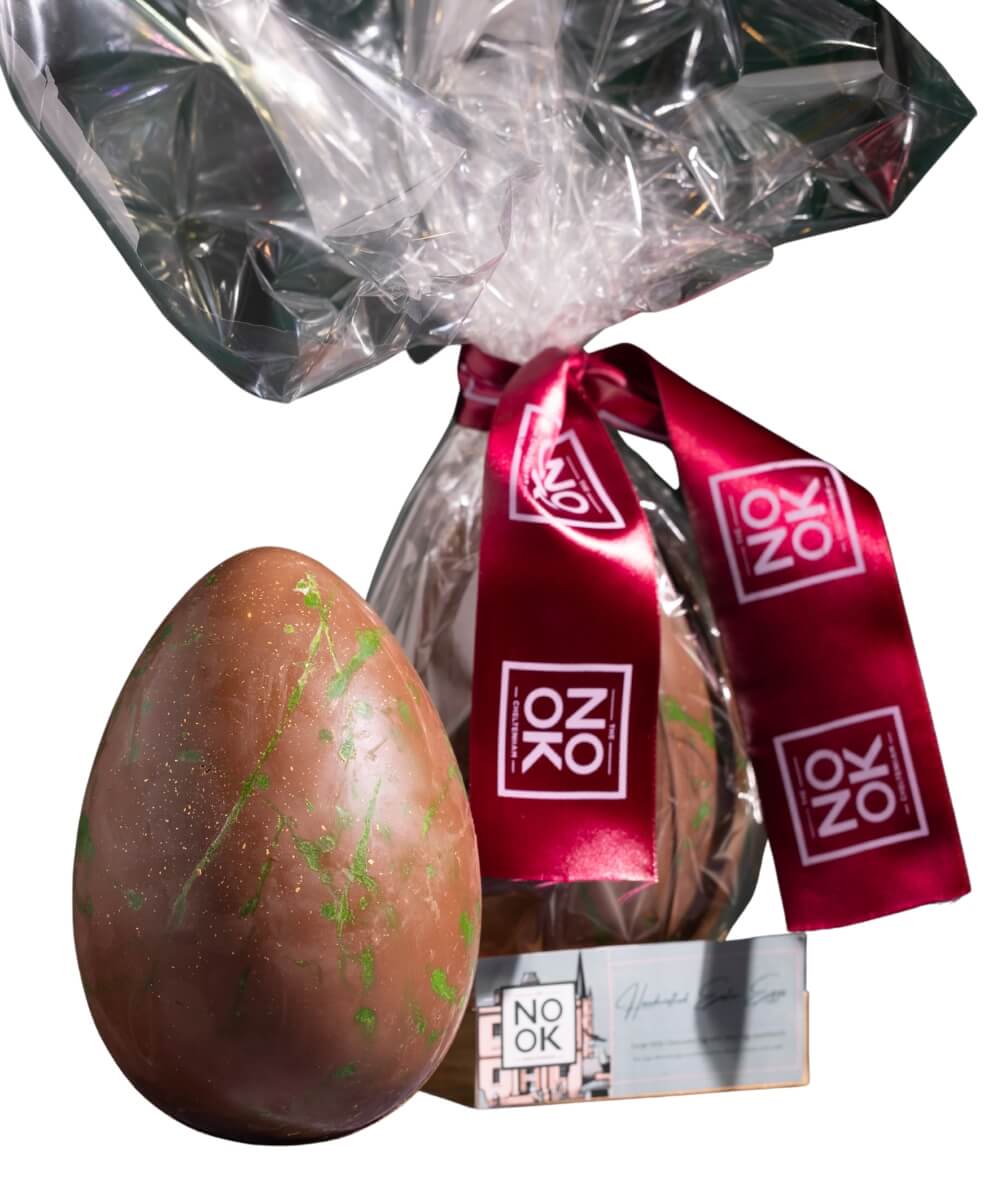
For a classic done well, The Nook Cheltenham Midi Egg celebrates the simple pleasure of a traditional milk chocolate Easter egg. Created by The Nook, the team behind Cheltenham’s rooftop restaurant The Nook On Five, the egg is handmade in small batches by Bordeaux-trained chocolatier Marjolaine. Each one is crafted using high-quality whole milk chocolate and formed entirely by hand, with no shortcuts involved – just skilled hands, good chocolate and a great deal of care. The result is a classic hollow chocolate shell designed to be cracked open on Easter morning, offering a timeless Easter treat that focuses on simple, well-made ethical chocolate.